
Our site and our story
Five generations of blacksmithing. One family. A living tradition.
There are few places where the past and present are quite so closely intertwined as Rowhurst Forge. For almost a century, the Quinnell family has made its home and livelihood here, building a reputation in the world of blacksmithing, architectural ironwork, artistic metalwork and education.
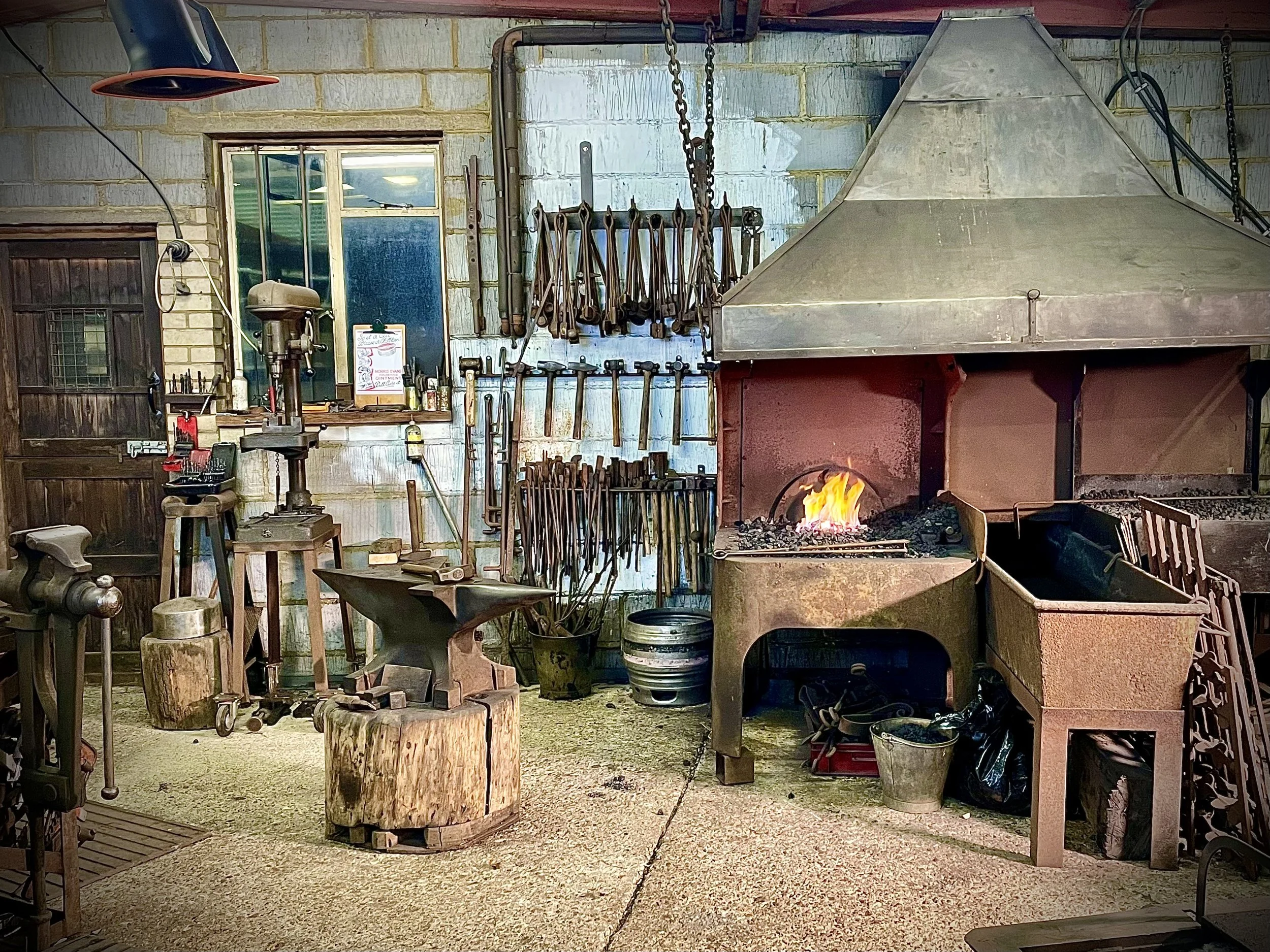
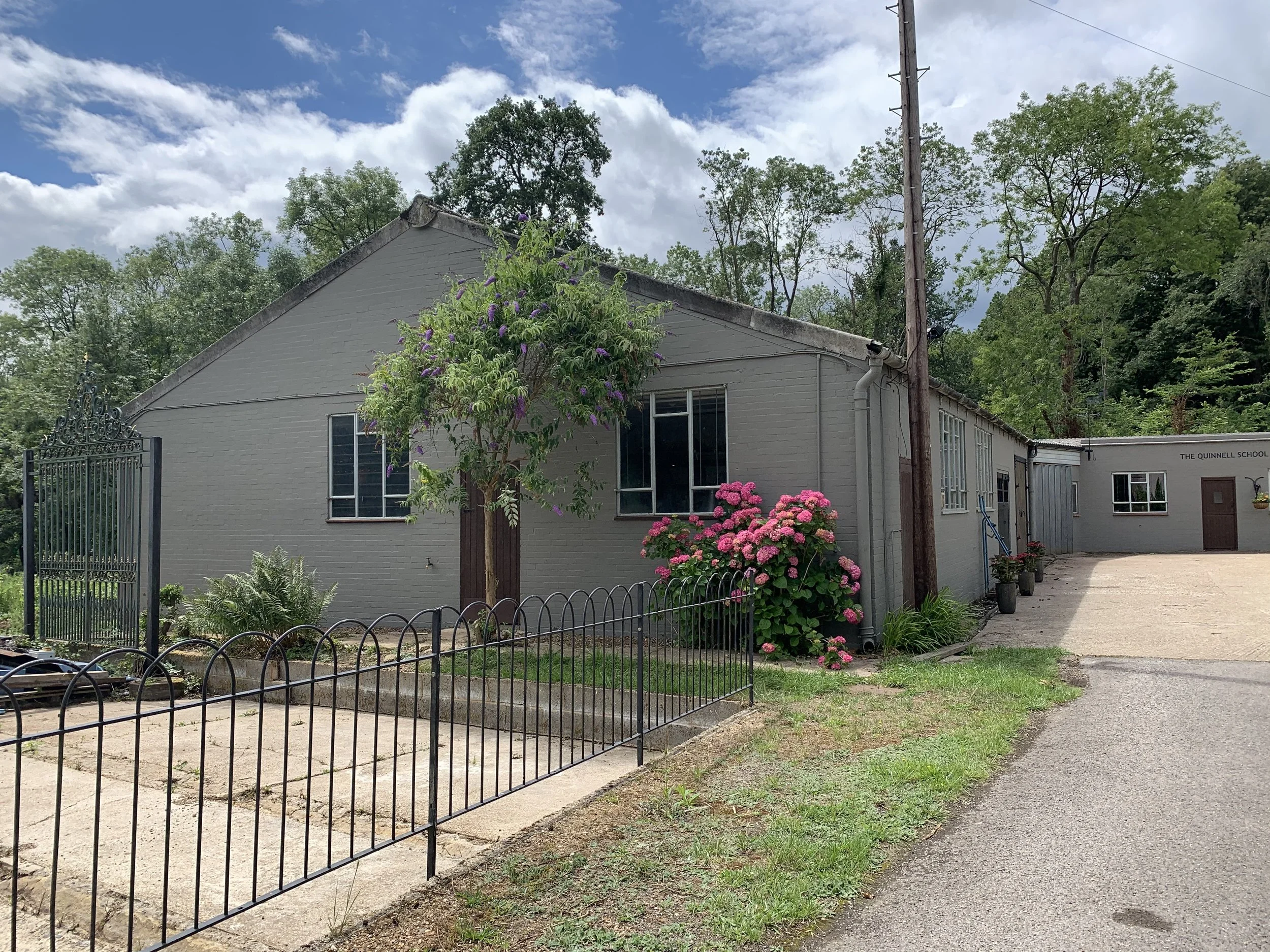
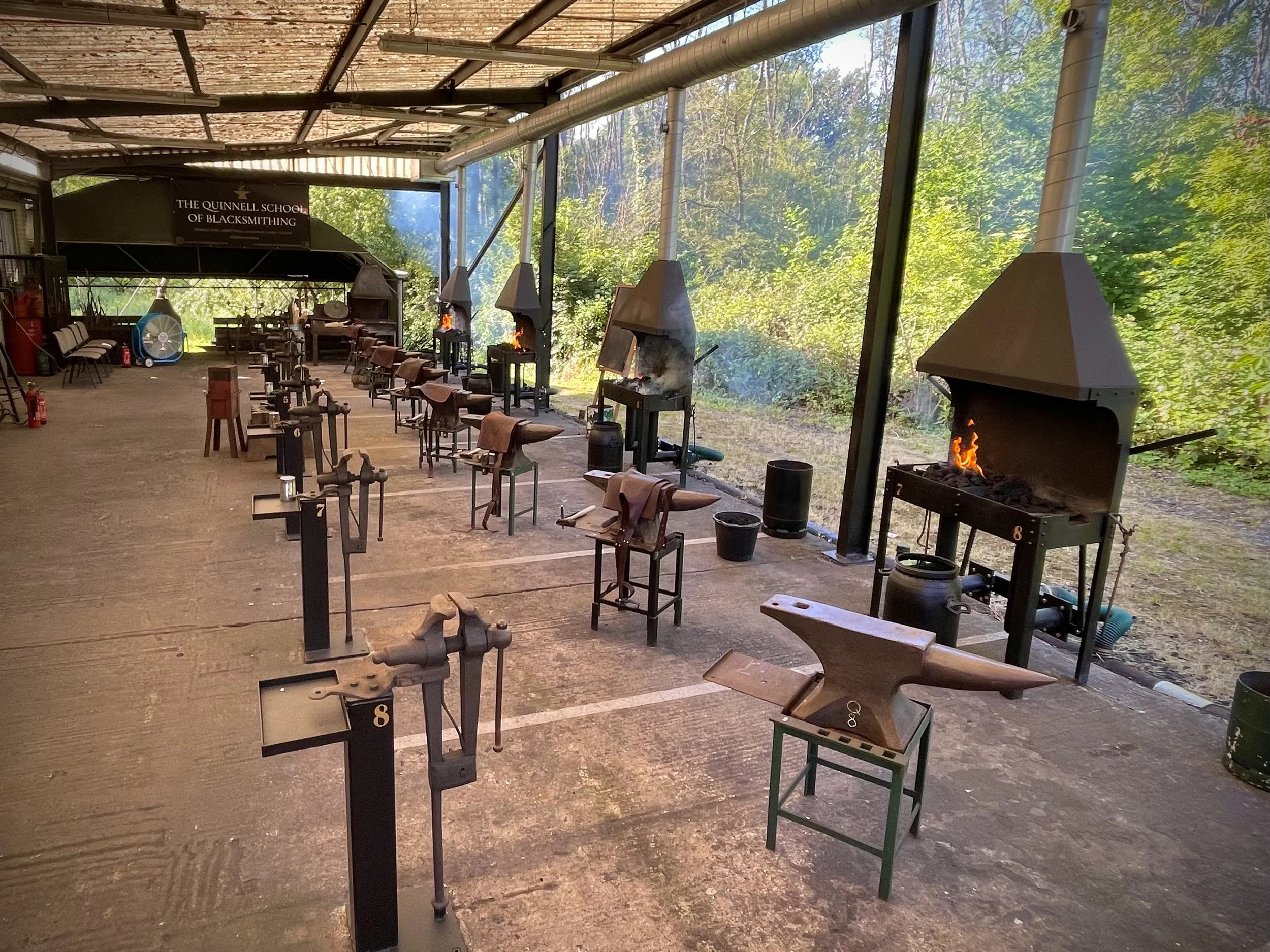
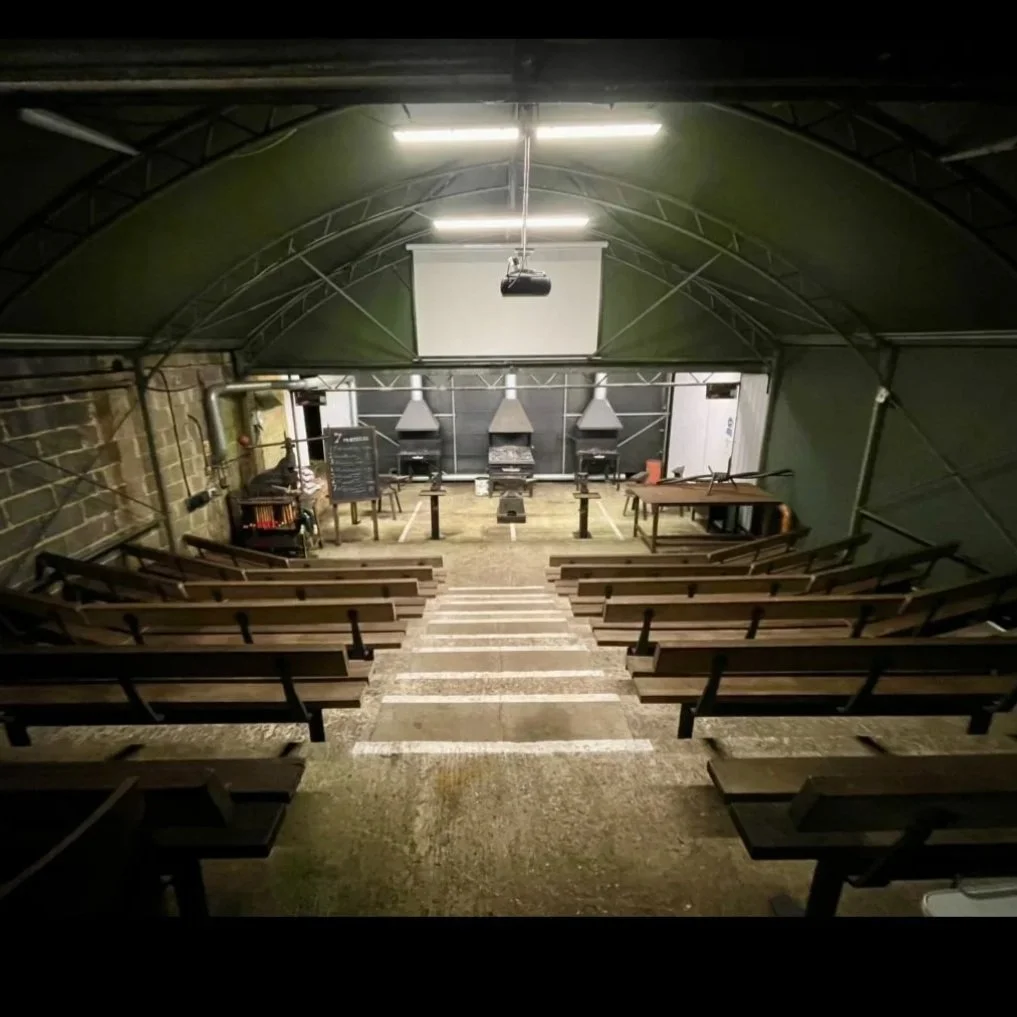
Today, Rowhurst is home to two family businesses, Richard Quinnell Limited, trading as The Quinnell School of Blacksmithing, and Fire & Iron Limited. Together, they represent different but closely connected aspects of the same enduring passion: the creation, appreciation and preservation of metalwork, and the passing on of the skills that make it possible.
Behind the businesses is a family whose association with ironworking reaches back centuries: internationally respected blacksmiths who helped revive a declining British craft, a gallery established to give contemporary metalworkers a platform, and a historic house whose story is considerably older than the forge itself.
This page tells the story of the Quinnell family, their businesses and their home at Rowhurst Forge.
The Quinnell Family: A Heritage in Iron
The Quinnell family's association with blacksmithing and ironworking extends back to the sixteenth century, with successive generations involved in the trade across Surrey and the surrounding counties.
For centuries, the blacksmith occupied an essential place in everyday life. From making agricultural implements and tools to architectural ironwork, gates, railings and decorative commissions, the work of the smith was woven into the fabric of communities. It was a demanding trade, requiring practical ingenuity, technical knowledge and an intimate understanding of iron.
Although the nature of the craft has changed enormously, the Quinnell family's connection with it has endured.
The family's story at Rowhurst began in 1932 when the forge was established on the estate in Leatherhead. What began as a family metalworking business would, over the following decades, develop into something much more significant: a centre for architectural ironwork, a catalyst for the revival of artistic blacksmithing in Britain, a nationally recognised gallery and an established school dedicated to teaching the craft.
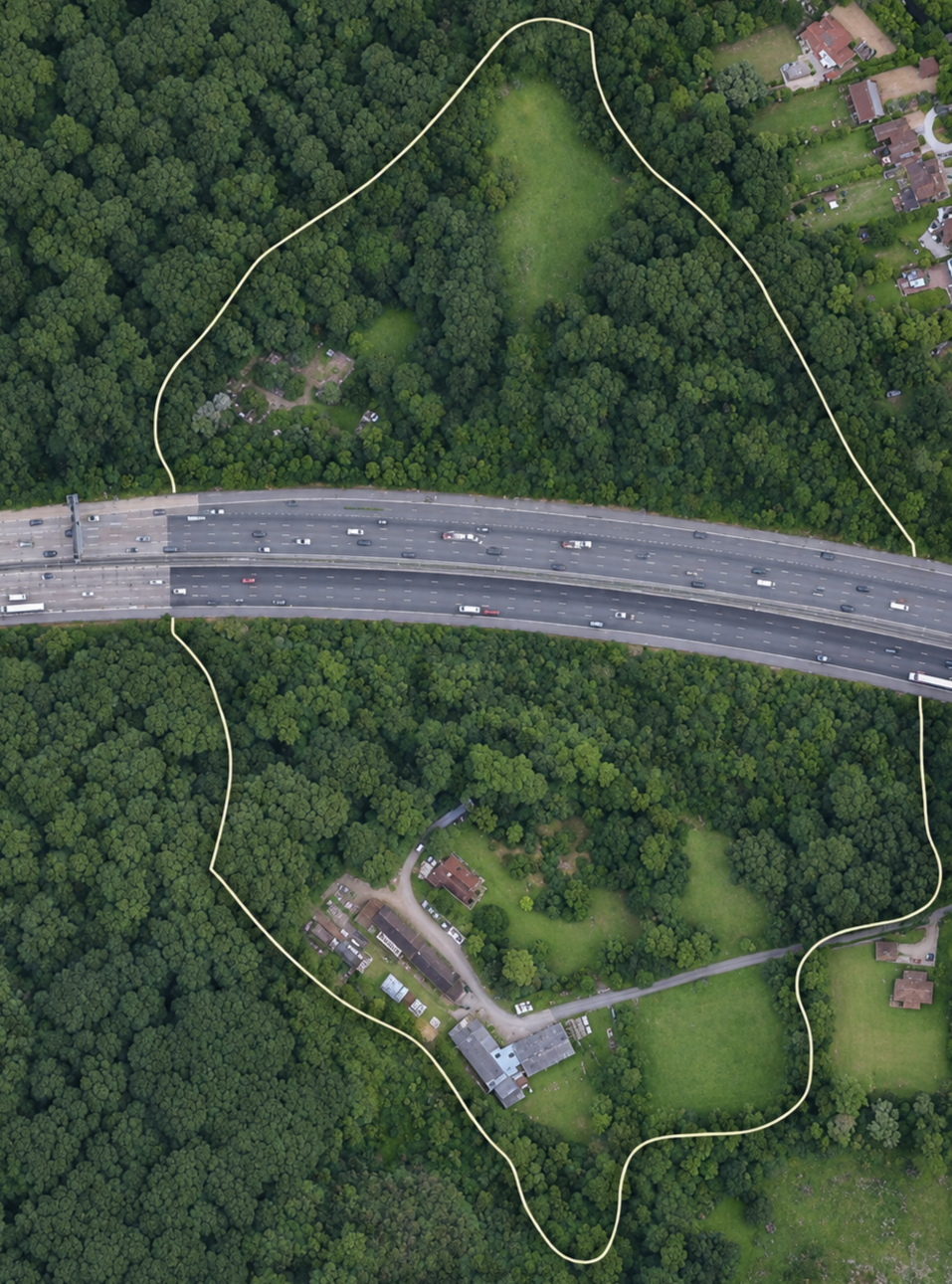
The Rowhurst Forge Site
Located in Leatherhead Surrey, the site was cut in two in the 1970s for the construction of the M25.
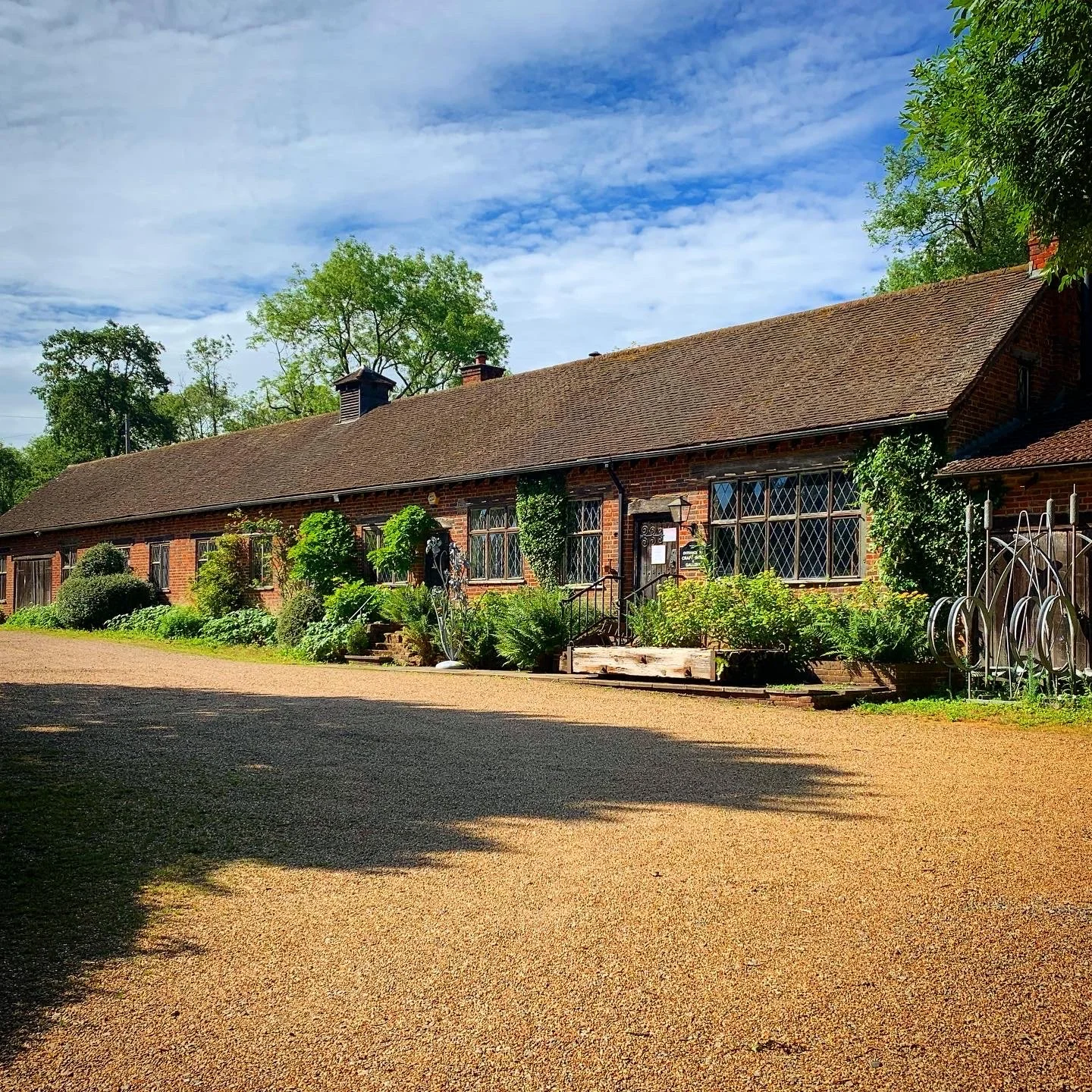
Fire & Iron Gallery, the workshops and the Rowhurst house can be found at the south of the site.
The business has passed through successive generations, each bringing new ideas and ambitions while retaining a connection with the traditions and practical skills that first brought the family to the forge.
Today, that responsibility rests with the next generation of the Quinnell family, continuing a story that has been shaped by craftsmanship, creativity, enterprise and an enduring enthusiasm for blacksmithing.
Richard Quinnell Limited: The Foundations of a Family Business
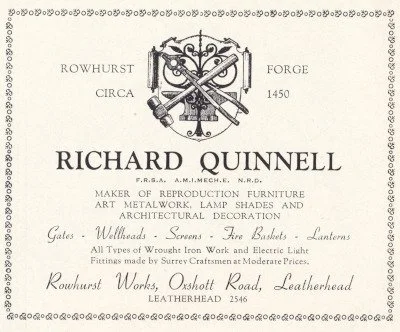
The modern history of the Quinnell businesses at Rowhurst can be traced to 1932, when Richard Quinnell's father, Richard Hector Quinnell, moved to Rowhurst with his wife Vema Quinnell. It was at this time that Richard Hector established the family's blacksmithing operation in Leatherhead.
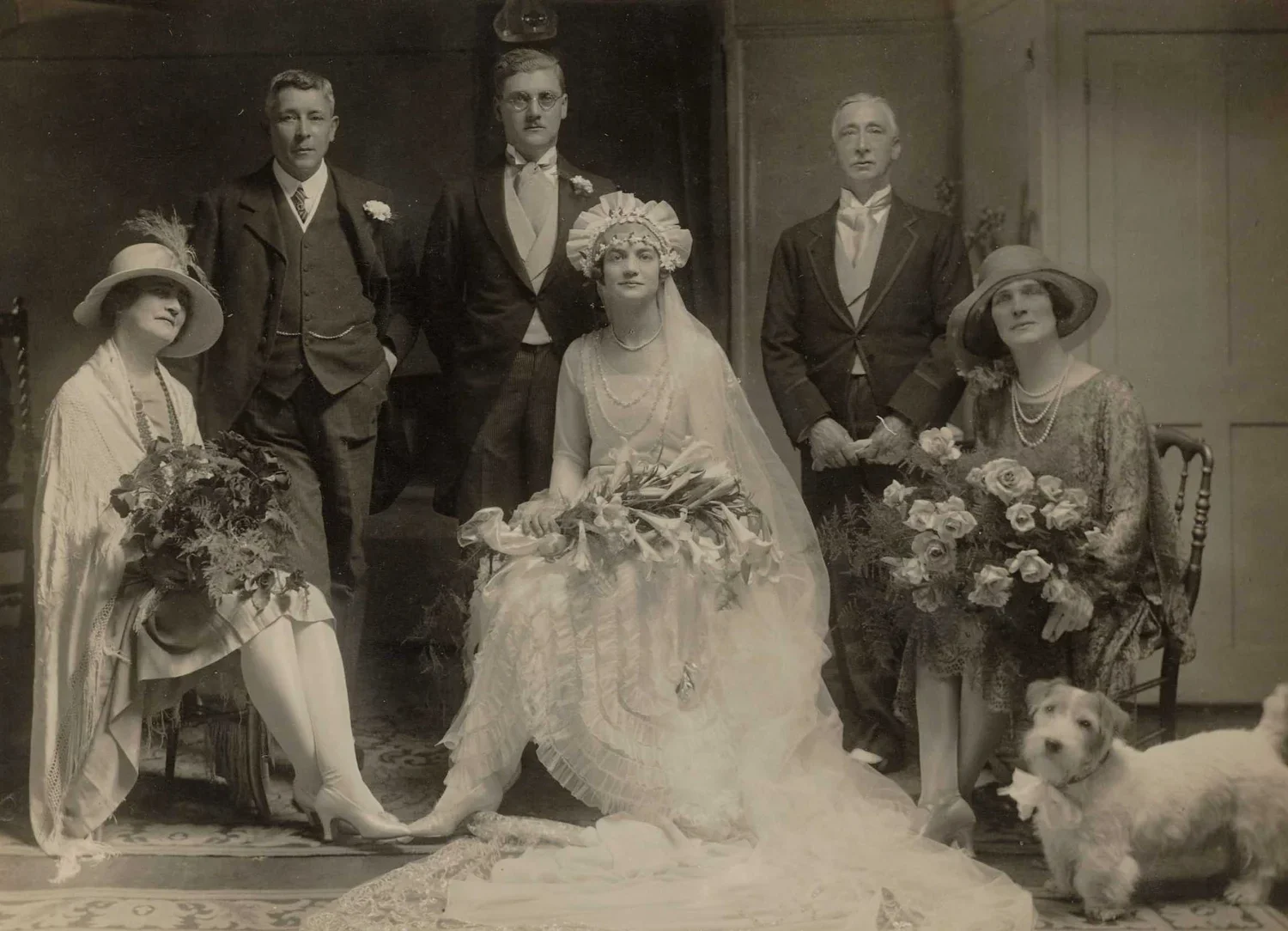
Richard & Vema Quinnell
Richard Hector Quinnell & Vema Quinnell (centre) photographed on their wedding day - 1927.
Originally trained as a mechanical engineer, Richard Hector ran a business in London supplying light fittings and electrical components. His introduction to decorative ironwork came through the production of scrolled metal fittings for lighting. What began as an extension of his existing business developed into a much larger undertaking, establishing the foundations of the family’s future in architectural metalworking.
With the outbreak of the Second World War in 1939, Richard Hector Quinnell left to serve as a Lieutenant-Colonel and acting colonel for 7 years, leaving his wife, Vema Quinnell, to take over the running of the family business at Rowhurst. She assumed responsibility for keeping the business operating during an exceptionally difficult period, demonstrating considerable resilience and determination. Her role was instrumental in ensuring the continuity of the family enterprise throughout and following the war years, allowing it to continue into the next generation.
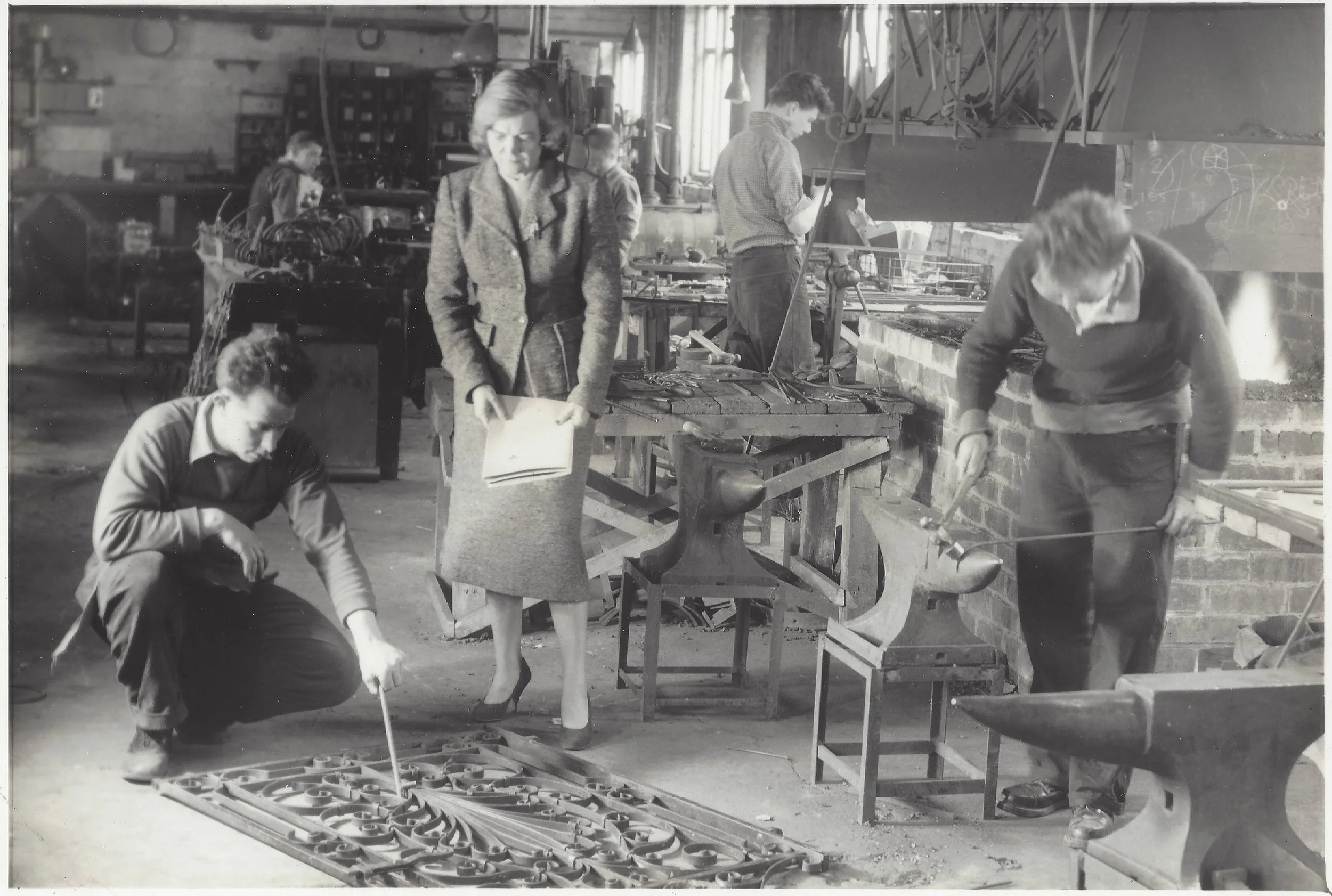
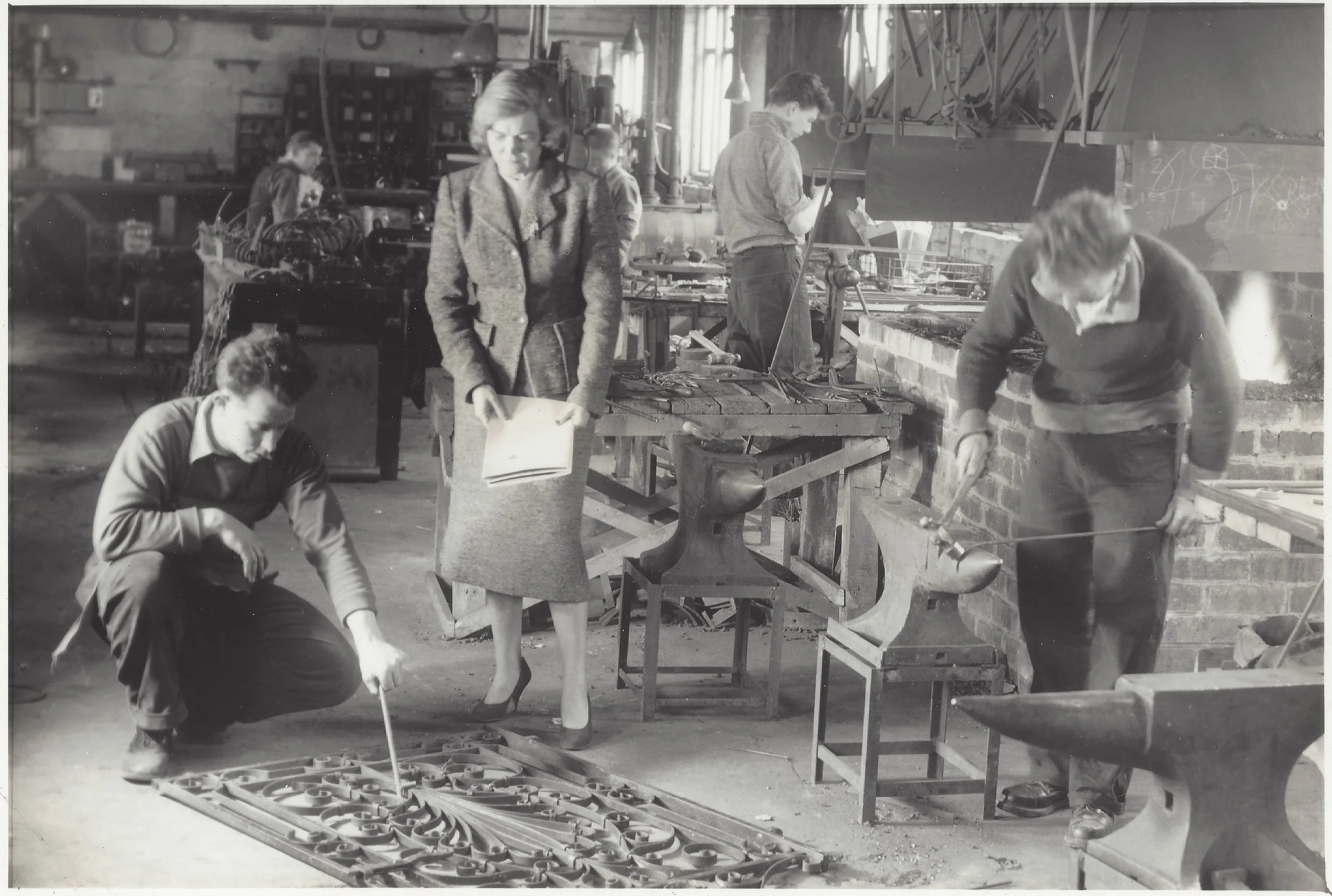
Circa 1960
Vema Quinnell overseeing the making of a garden gate, which remains in its original position today, providing access to the garden at Rowhurst. The photograph was taken inside the former workshop, now home to Fire & Iron Gallery. Remarkably, the forge visible on the right is still in place, and the very same anvils seen in the photograph remain in regular use today.
In 1948, disaster struck the newly constructed Richard Quinnell Limited workshops when a devastating acetylene explosion completely flattened the two-storey building and caused considerable damage to Rowhurst opposite. The destruction of the workshop was total, but with post-war shortages and limited resources still presenting considerable challenges, there was little opportunity for a conventional rebuild. Instead, the workshops were reconstructed quickly and with remarkable ingenuity, making use of whatever materials could be salvaged or sourced locally. Much of the rubble from the original building was incorporated into the new structure, alongside reclaimed materials from Leatherhead's historic Swan Hotel, a former coaching inn first recorded in 1637 which had stood at the heart of the town for more than 300 years and was the inspiration for ‘the crown’ in jane austen’s novel ‘emma’. The result was a building born out of necessity, resourcefulness and determination, and one that would continue to serve the family business for decades to come.
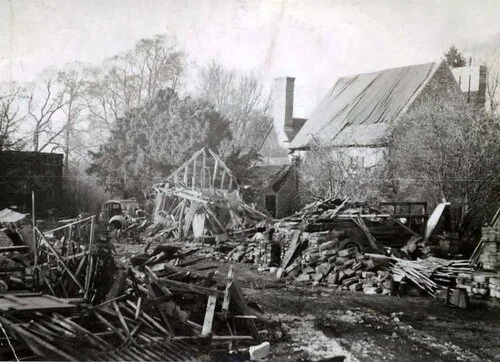
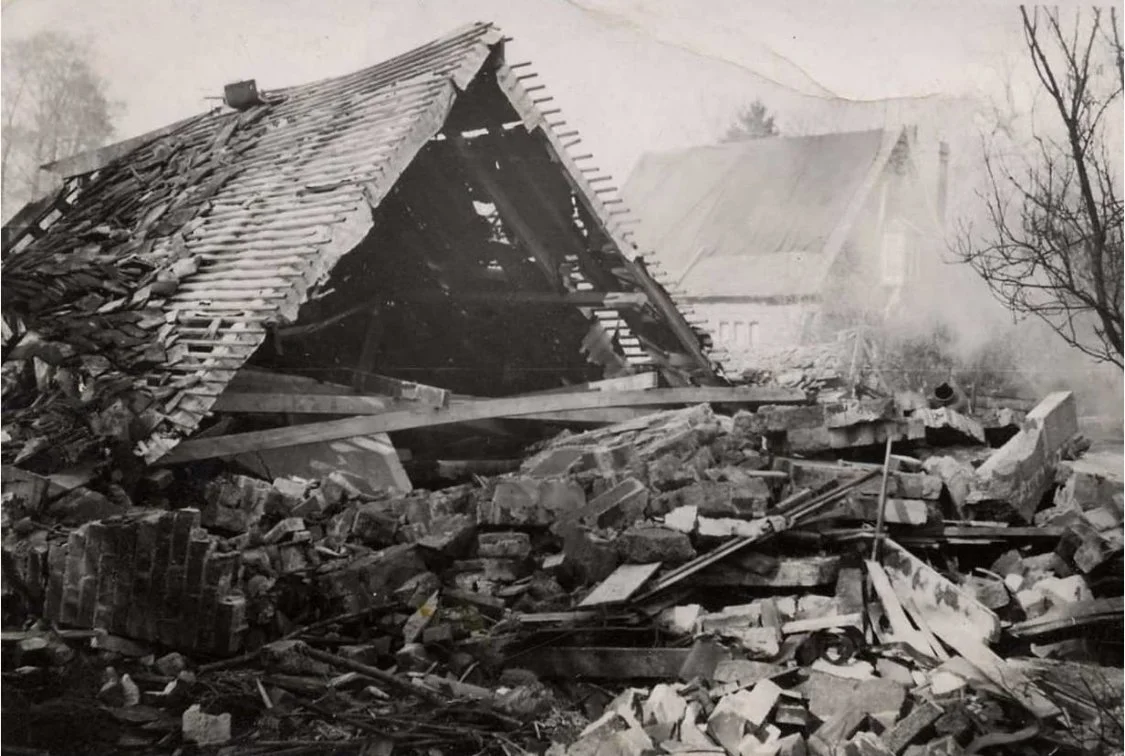
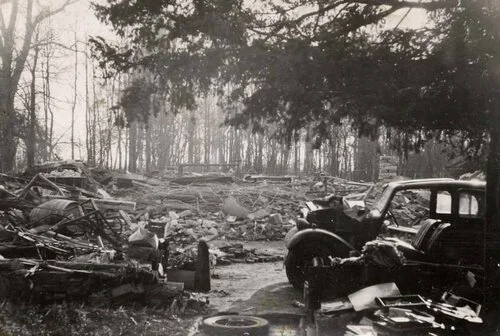
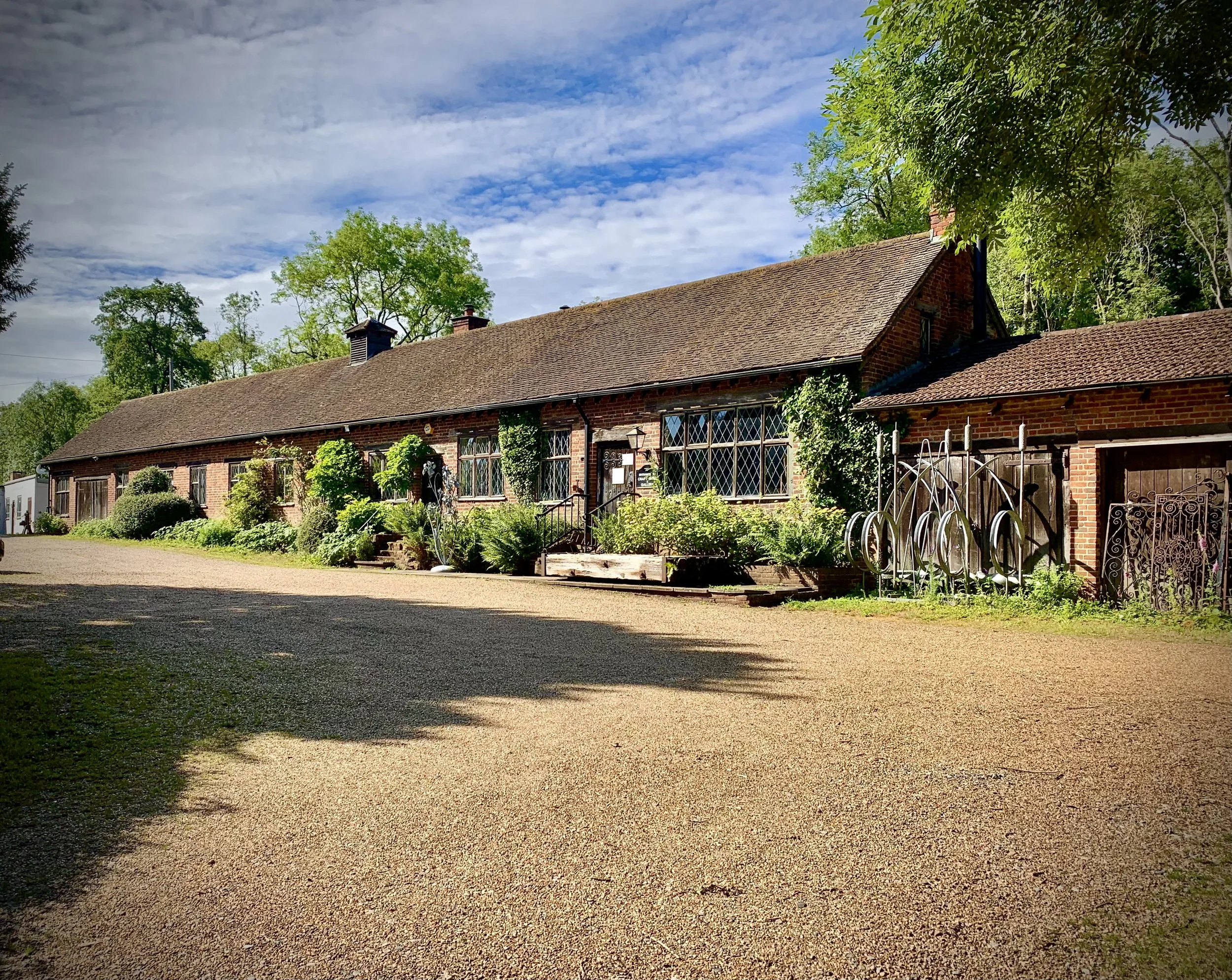
The rebuilt workshops remain in use today as the home to Fire & Iron Gallery.
Following his father's death, Richard james Quinnell became involved in the business in the early 1960s. Working from Rowhurst Forge, he continued to develop Richard Quinnell Limited into a highly regarded architectural metalworking and blacksmithing firm, undertaking commissions of increasing scale and international significance.
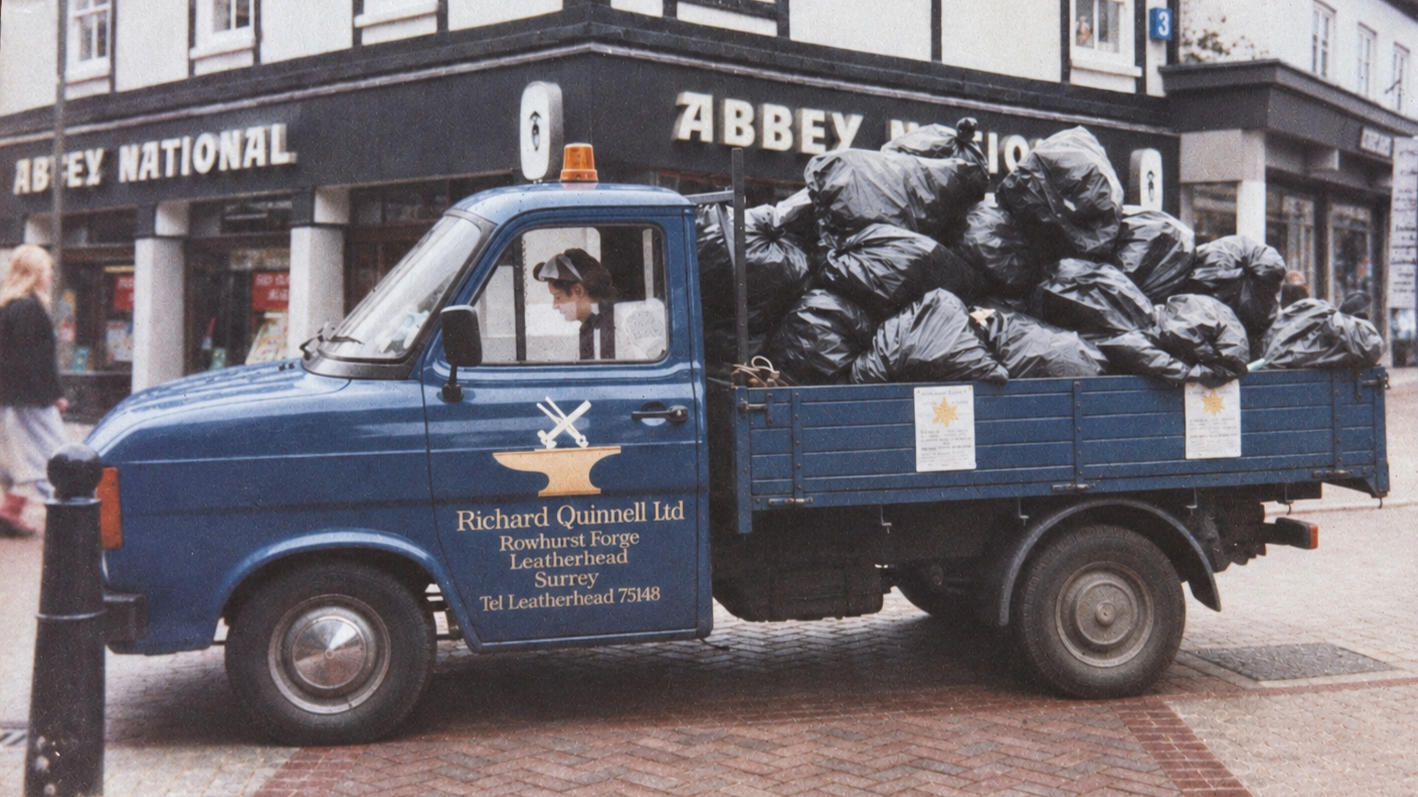
Circa 1982
The Richard Quinnell Limited truck pictured in Leatherhead town centre, following a major community litter pick organised by the Quinnells, with a young Lucy Quinnell sitting in the passenger seat.
Over more than five decades, Richard built an international reputation for the design, production, restoration and installation of architectural and artistic ironwork worldwide. His work combined traditional forging techniques with an ambitious approach to design, demonstrating that blacksmithing could be both a practical trade and a highly sophisticated art form.
Among the notable commissions associated with Richard and his team are the gates to Shakespeare's Globe Theatre in London, the coat of arms for the British Embassy in Rome, the Ivegate Arch in Bradford and the gates to the National Ornamental Metal Museum in Memphis, Tennessee. His work also includes significant historic restoration projects, including the conservation of important architectural ironwork at St Paul's Cathedral and the gilded iron Staircase at strawberry hill.
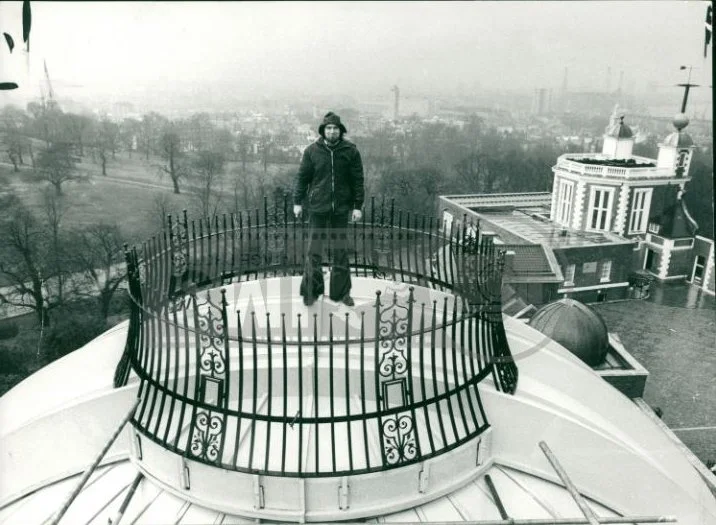
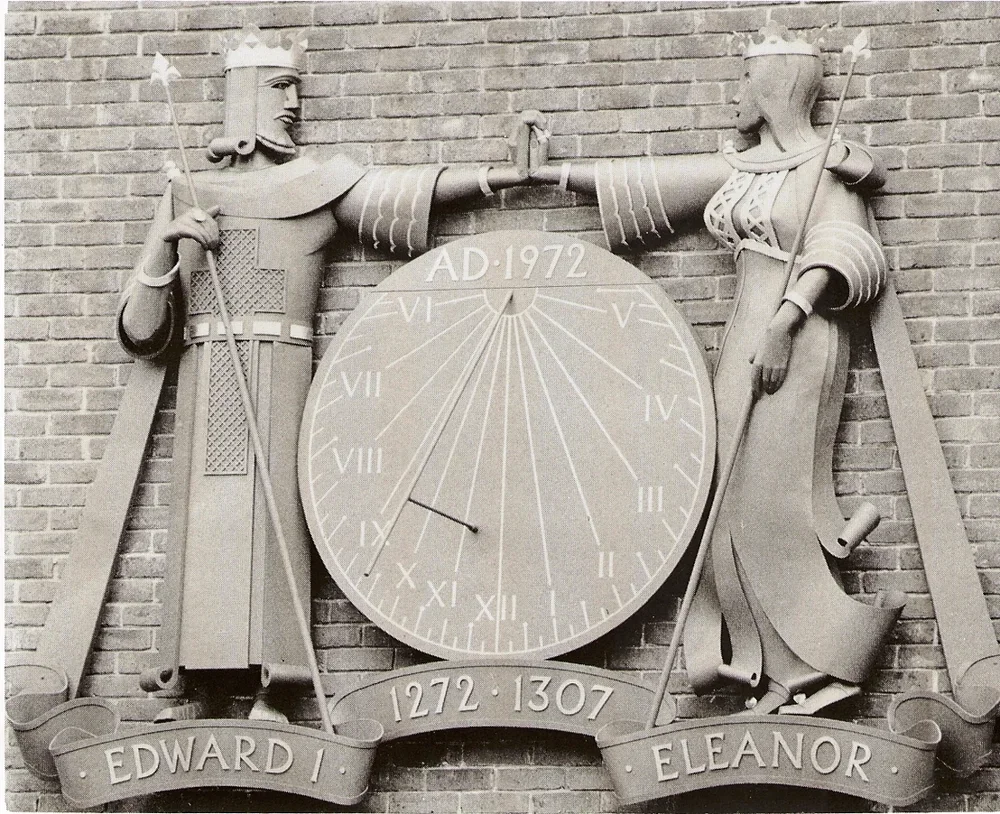
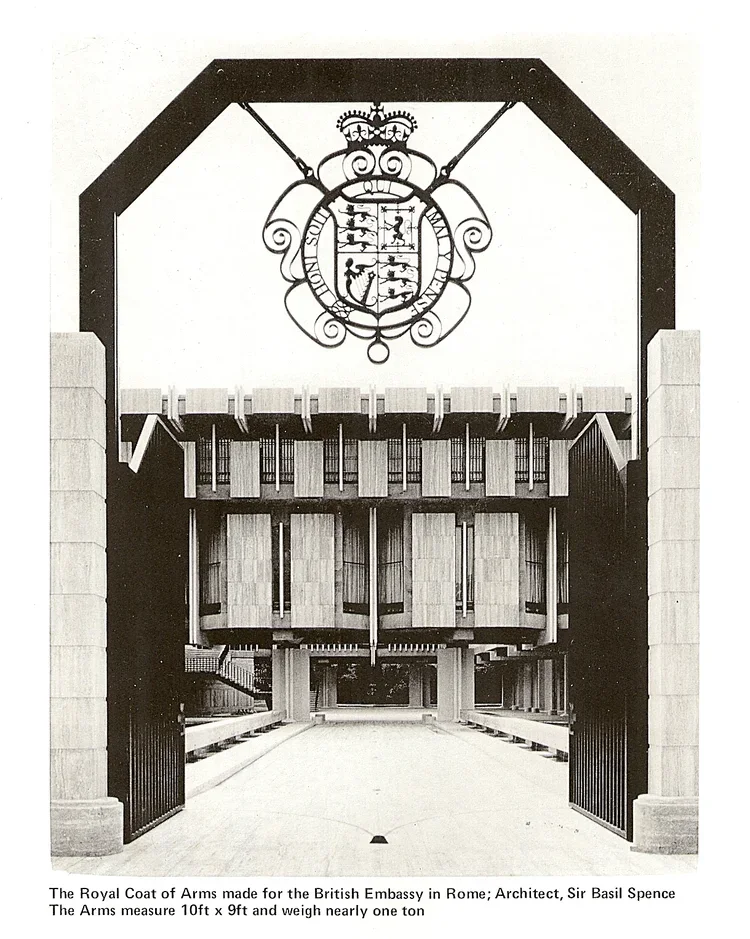
Richard's contribution extended far beyond the work produced in his own forge. At a time when traditional blacksmithing was in serious decline, he became one of the leading figures in the movement to re-establish the craft as a relevant and respected contemporary art form.
In recognition of his contribution to British blacksmithing, his influence on the development of the craft and the support of other blacksmiths, Richard was awarded the MBE in 1989. He is also a Fellow of the Worshipful Company of Blacksmiths.
Now in his mid-eighties, Richard has long since retired from the day-to-day running of the businesses, but remains a familiar and valued presence at Rowhurst. His knowledge, experience and enthusiasm continue to be an important part of the family's story.
The British Artist Blacksmiths Association: Reviving a Craft
One of the most important chapters in Richard Quinnell's career was the part he played in the revival of artistic blacksmithing in Britain.
During the twentieth century, the widespread availability of mass-produced metalwork, industrial manufacturing and changing architectural fashions had led to a significant decline in traditional blacksmithing. The skills remained, but opportunities for artistic and creative forging had become increasingly limited.
Richard and his first wife, Jinny, were determined to help change this.
In the 1970s, Richard became increasingly involved with the developing international artist blacksmithing movement. Following his participation in conferences and exhibitions in North America, he and Jinny recognised the potential for a similar organisation in Britain.
In 1978, they organised a gathering of blacksmiths at Rowhurst Forge. This meeting became the foundation of the British Artist Blacksmiths Association (BABA).
The intention was straightforward but ambitious: to bring blacksmiths together, encourage the exchange of knowledge, celebrate excellence in the craft and inspire a new generation to take up the trade.
The association helped create a community for professional blacksmiths, artists, students and enthusiasts, providing opportunities for education, collaboration, exhibitions and demonstrations.
The influence of that original gathering has been considerable. BABA has played an important role in the renewed appreciation of artistic blacksmithing in Britain and continues to support the craft through its activities, publications and events.
It is particularly fitting that the organisation was born at Rowhurst, where the Quinnell family continues to practise, teach and promote the very craft that inspired its creation.
Fire & Iron: Celebrating the Art of Metalwork
In 1982, Richard and Jinny Quinnell established Fire & Iron Gallery at Rowhurst.
Their ambition was to create a place where the finest work by British artist blacksmiths could be seen and appreciated by the public, architects, designers and collectors. They wanted to demonstrate the extraordinary creative possibilities of forged metal and provide talented makers with a platform to exhibit and sell their work.
At the time, this was a relatively pioneering idea. Blacksmithing was still widely perceived as a traditional trade, rather than a contemporary artistic discipline. Fire & Iron set out to challenge that perception.
Following Jinny's untimely death in 1988, at the age of 47, the gallery ceased to operate. in 1990, their daughter Lucy bought and restarted the gallery, resurrecting her parents' vision and developing it into a much broader celebration of metalworking and design.
Today, Fire & Iron is recognised as an internationally respected gallery for contemporary metal art and craftsmanship.
The gallery showcases the work of a remarkable range of makers, from established artist blacksmiths to innovative contemporary designers working with metals. Its collections extend well beyond iron and steel, encompassing bronze, copper, brass, aluminium, silver, gold, titanium, stainless steel and numerous other metals.
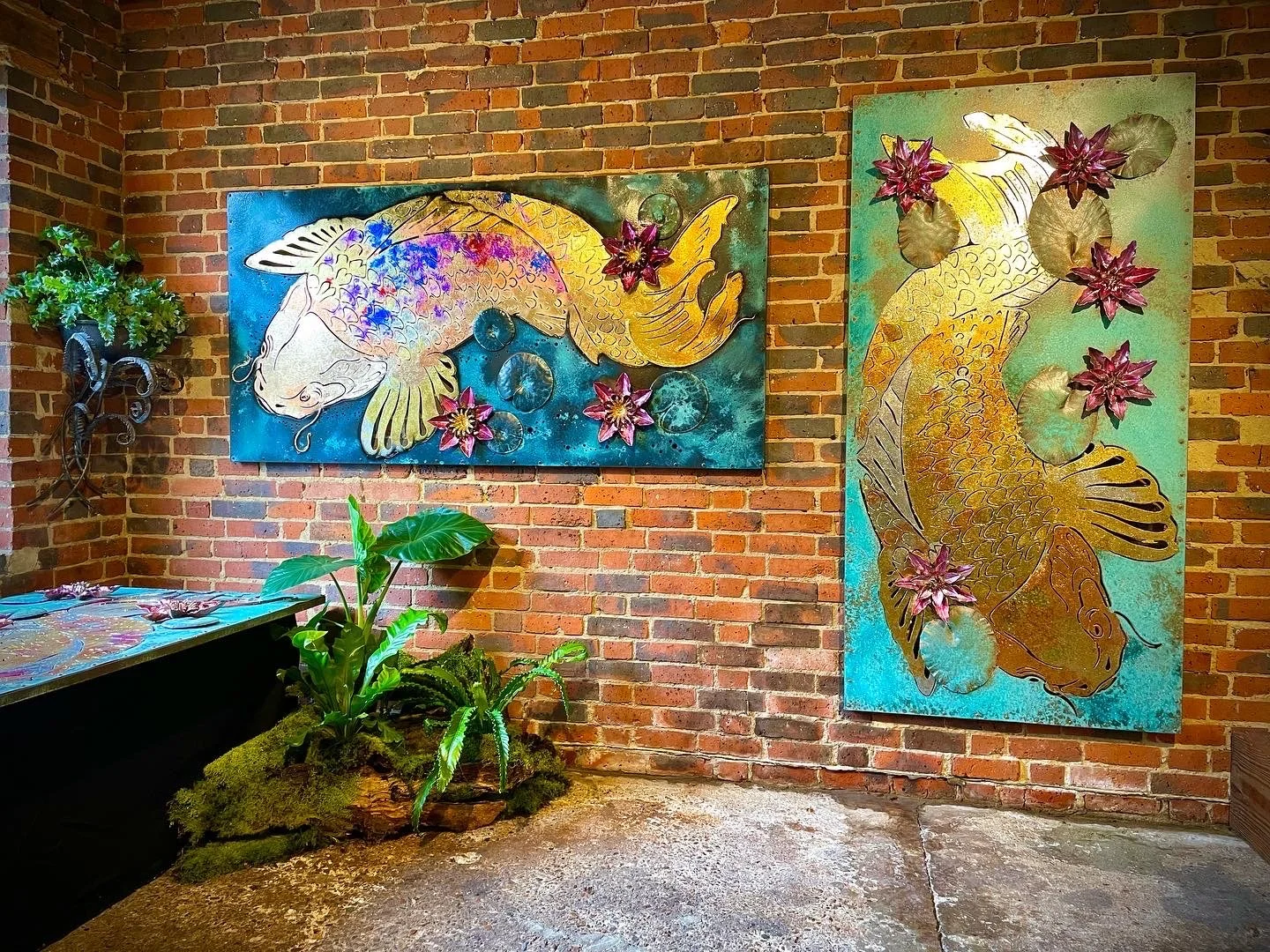
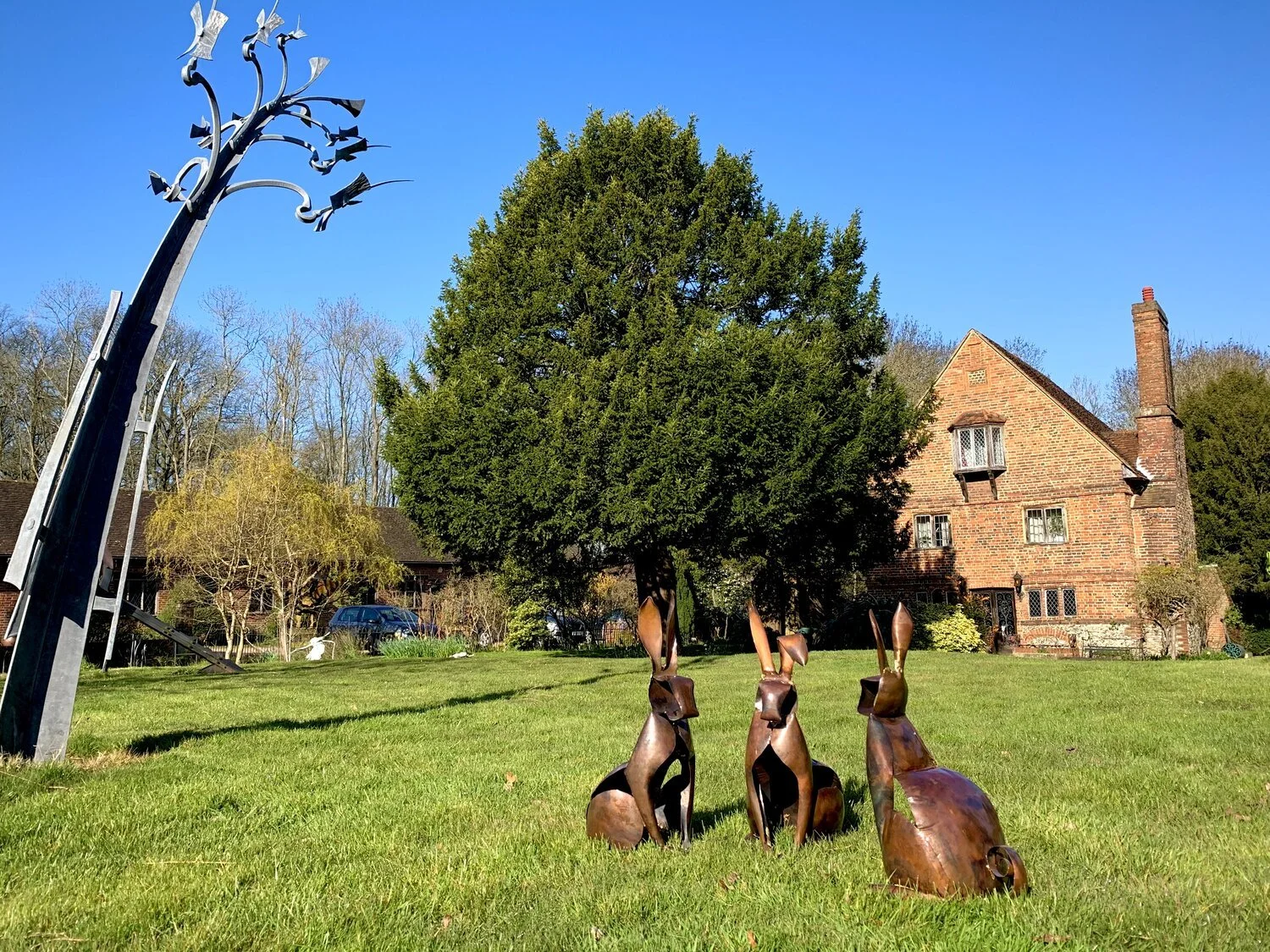
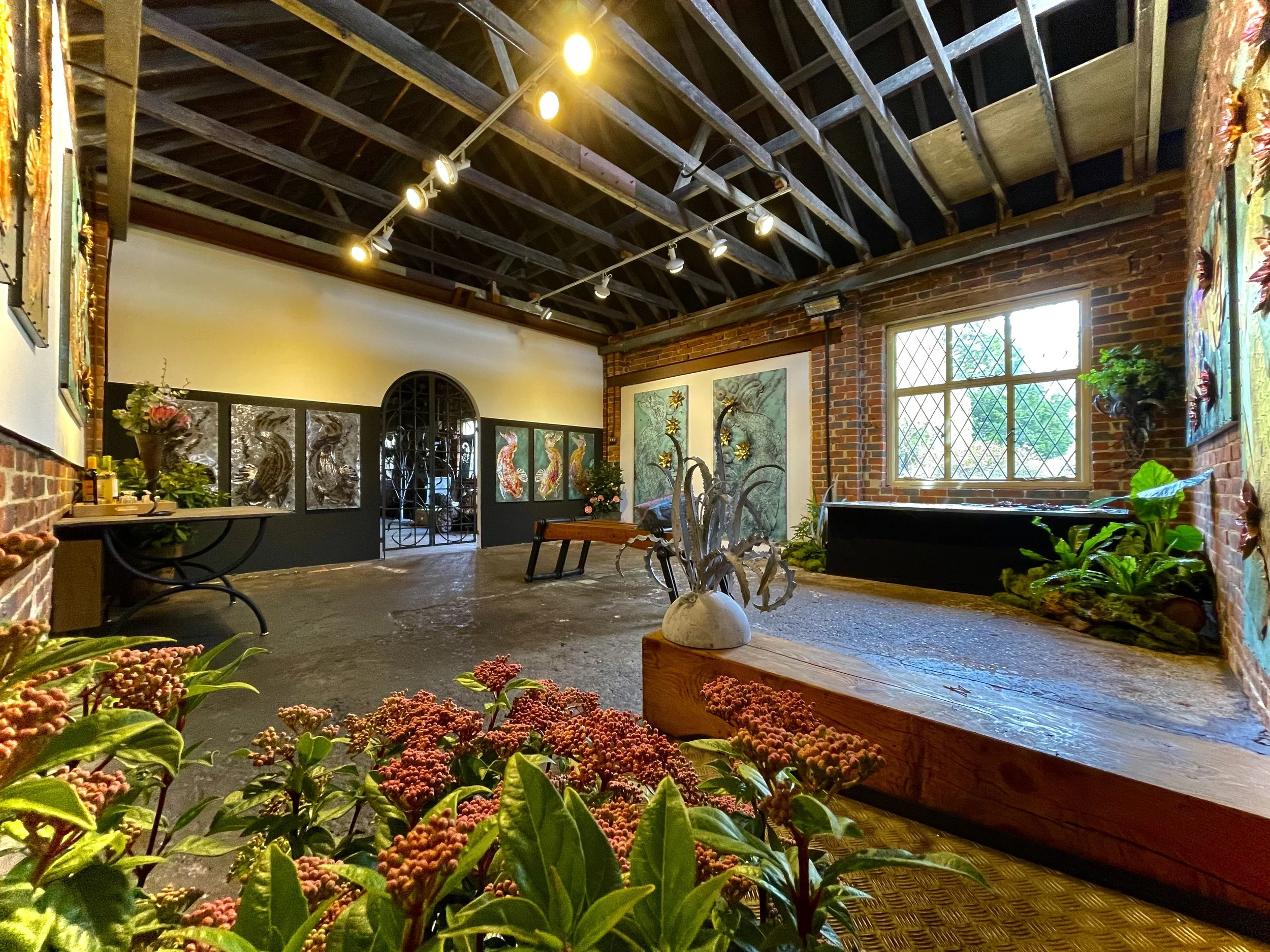
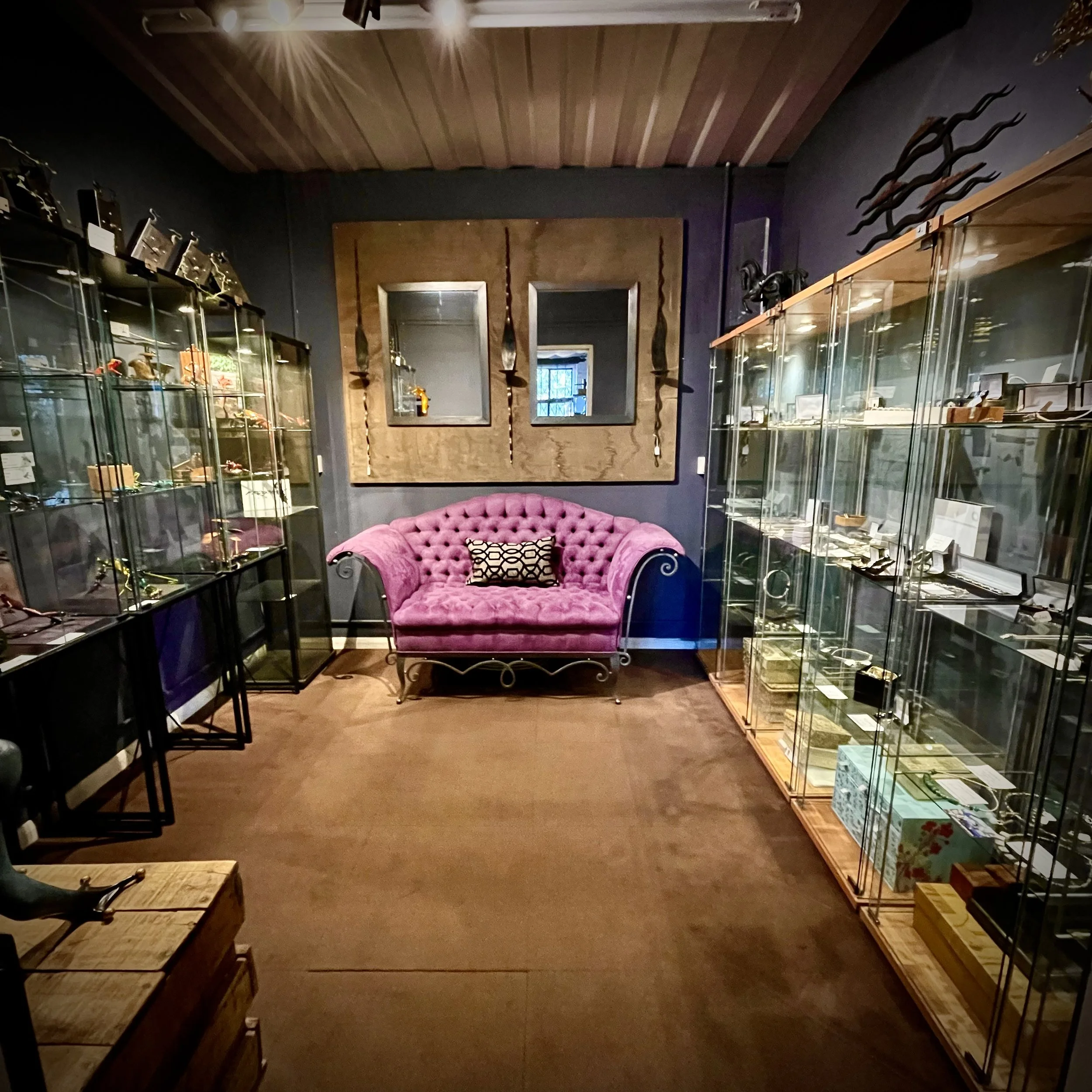
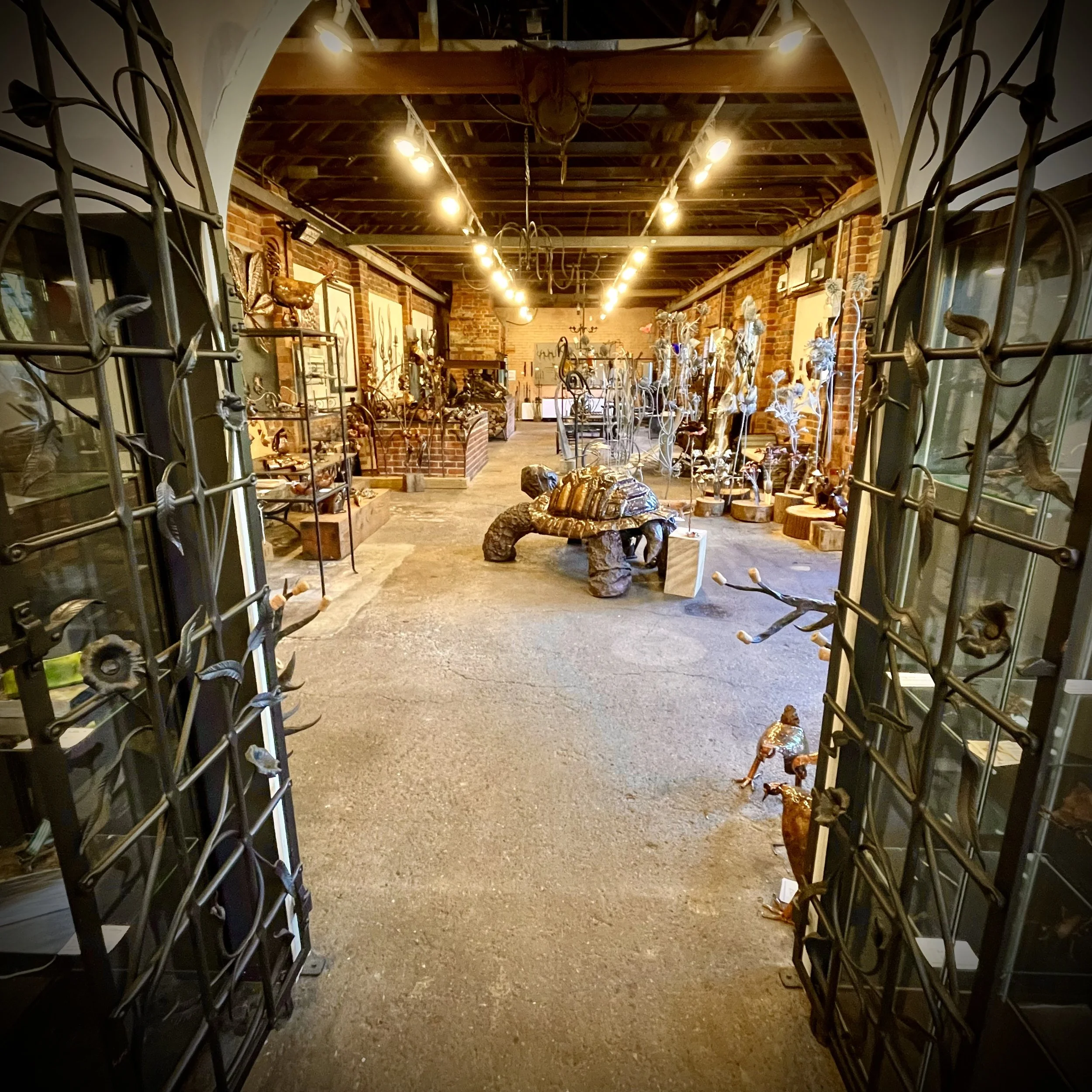
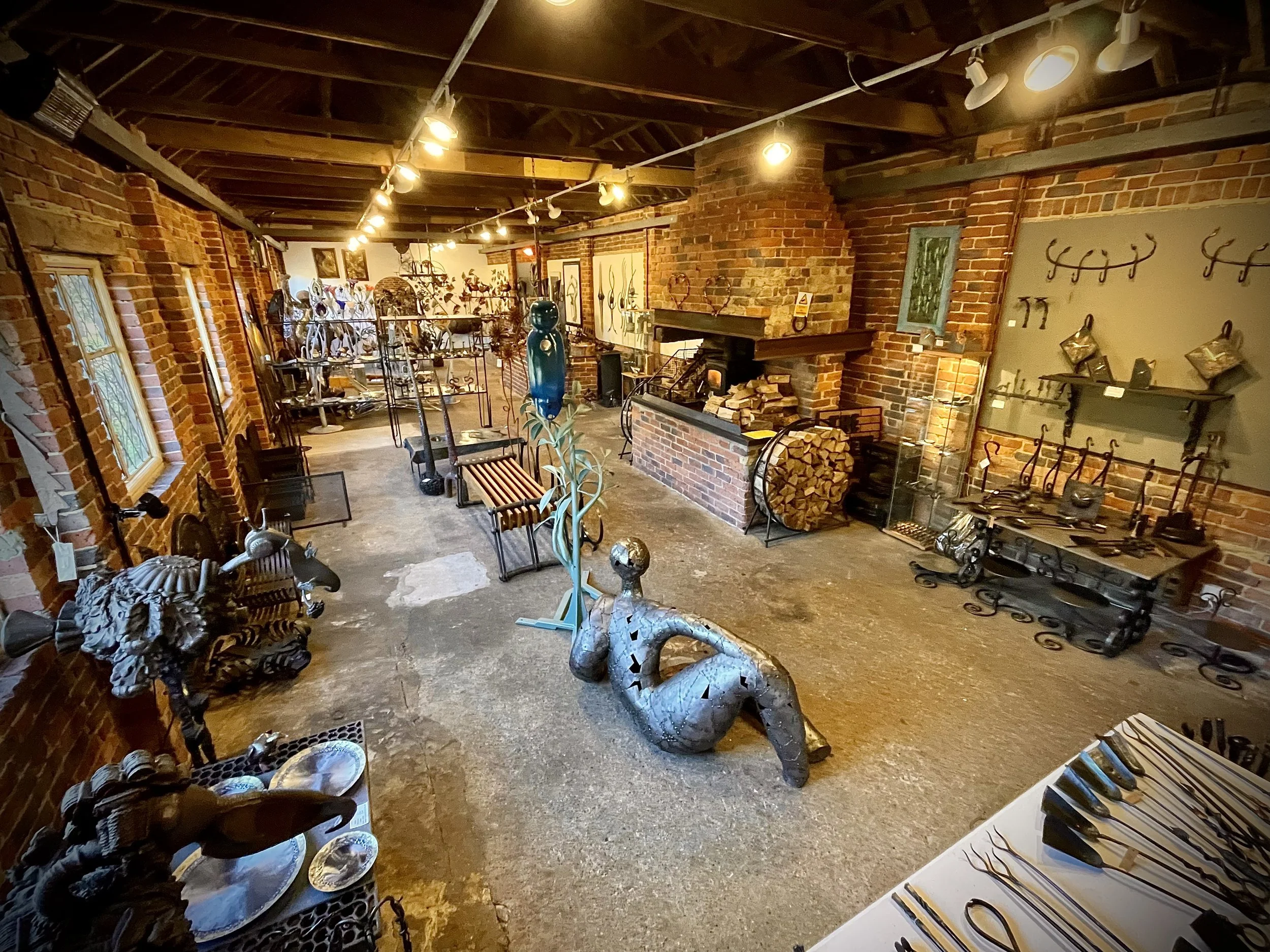
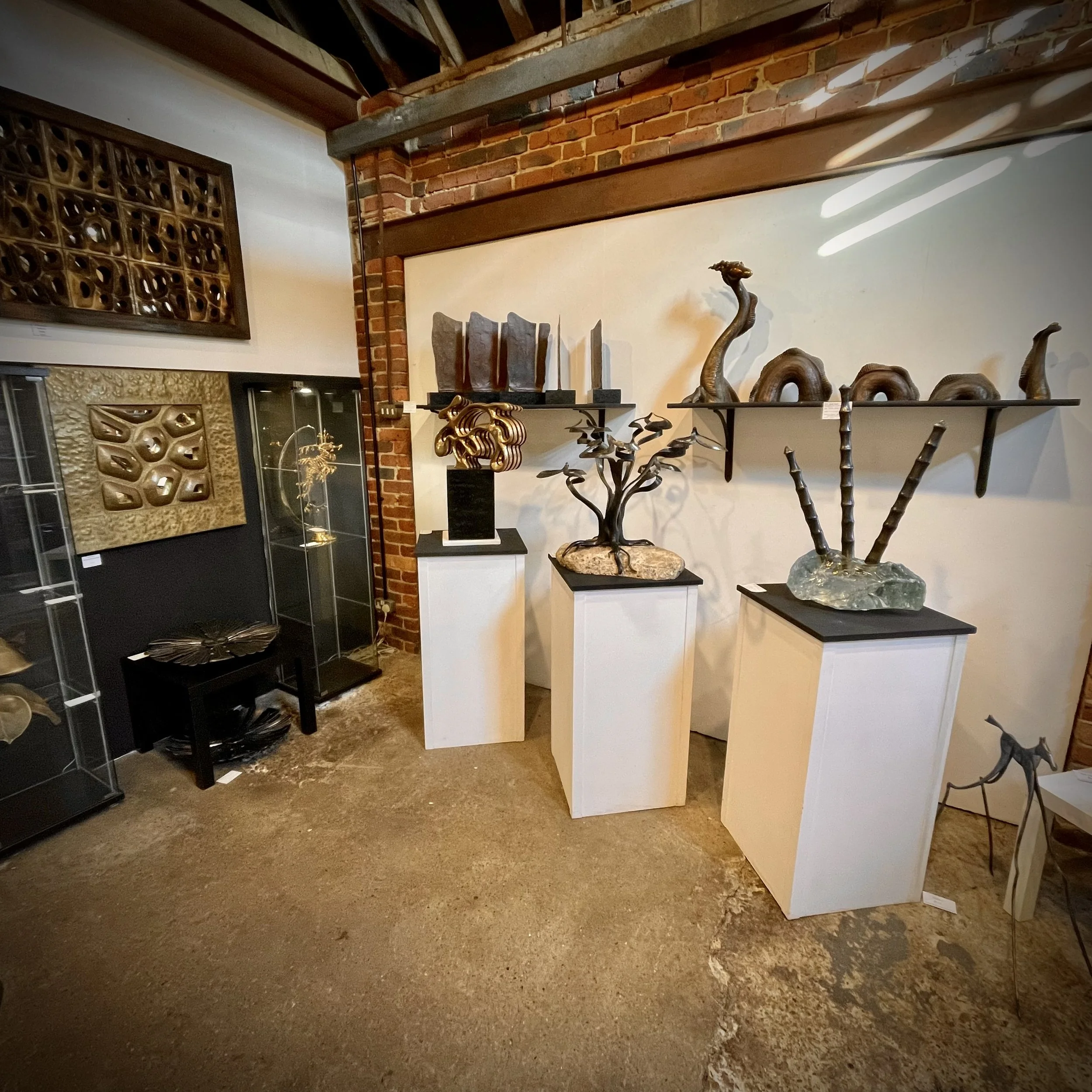
Visitors can discover everything from fine jewellery and smaller decorative objects to furniture, architectural features, sculpture and substantial works of public art.
Under Lucy's direction, Fire & Iron has grown in both scale and ambition. Special exhibitions, demonstrations and events complement its permanent displays, while Fire & Iron also undertakes commissions for private clients, architects, designers, organisations and public spaces.
The emphasis has always remained on quality, creativity, technical excellence and the enduring value of work made by hand.
Fire & Iron is not simply a gallery displaying metalwork. It is a continuation of the Quinnell family's commitment to ensuring that traditional skills remain visible, relevant and appreciated, while providing a home for contemporary makers to explore the possibilities of metal.
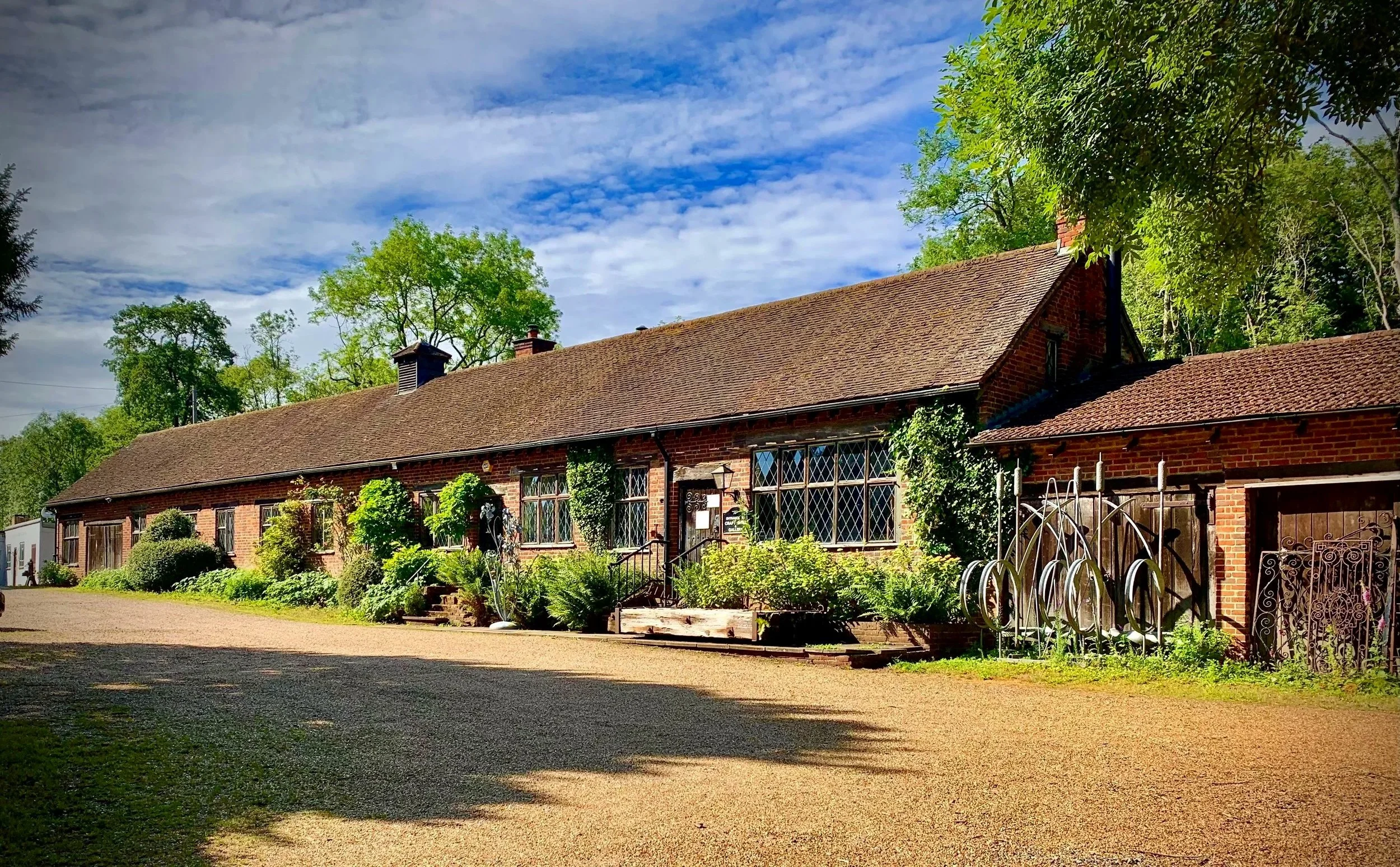
Fire & Iron Gallery
Located in our old workshop building, Fire & Iron Limited showcases an extraordinary range of craftmanship and creativity. Recognised worldwide, Fire & Iron is the place for discovering and acquiring exceptional metal artworks by leading British artists. The Fire & Iron team also creates bespoke artistic, sculptural and architectural ironwork to commission. www.fireandiron.co.uk
The Quinnell School of Blacksmithing: Passing on the Craft
In 1996, Richard Quinnell and his second wife, Pauline, established The Quinnell School of Blacksmithing at Rowhurst Forge.
Having spent decades working to revive and promote artistic blacksmithing, Richard recognised that the future of the craft depended not only on professional commissions and exhibitions, but also on encouraging more people to experience blacksmithing for themselves.
The school was established to provide practical, hands-on instruction in a properly equipped working forge, introducing people to the techniques, traditions and extraordinary satisfaction of working hot metal.
Over the years, the school has welcomed thousands of participants, from complete beginners and those seeking an unusual experience, to people with a deeper interest in developing their skills.
Today, The Quinnell School of Blacksmithing is the UK's most established provider of recreational blacksmithing courses and experiences. Its programme includes one-day and two-day courses, specialist masterclasses, private tuition and bespoke experiences.
Participants work at their own forges and anvils, learning under the guidance of highly experienced professional blacksmiths. The emphasis is on practical involvement, personal instruction and the opportunity to create something tangible to take home.
The school has also developed a significant educational and community role. Through its regular work with schools, colleges, young people and individuals with additional learning needs, it provides opportunities to discover the craft in an engaging, practical and safe environment.
In recent years, this work has expanded through ‘the Young Quinnell School of Blacksmithing’, including educational sessions, therapeutic learning opportunities and a mobile roadshow programme that takes blacksmithing to young people beyond Rowhurst.
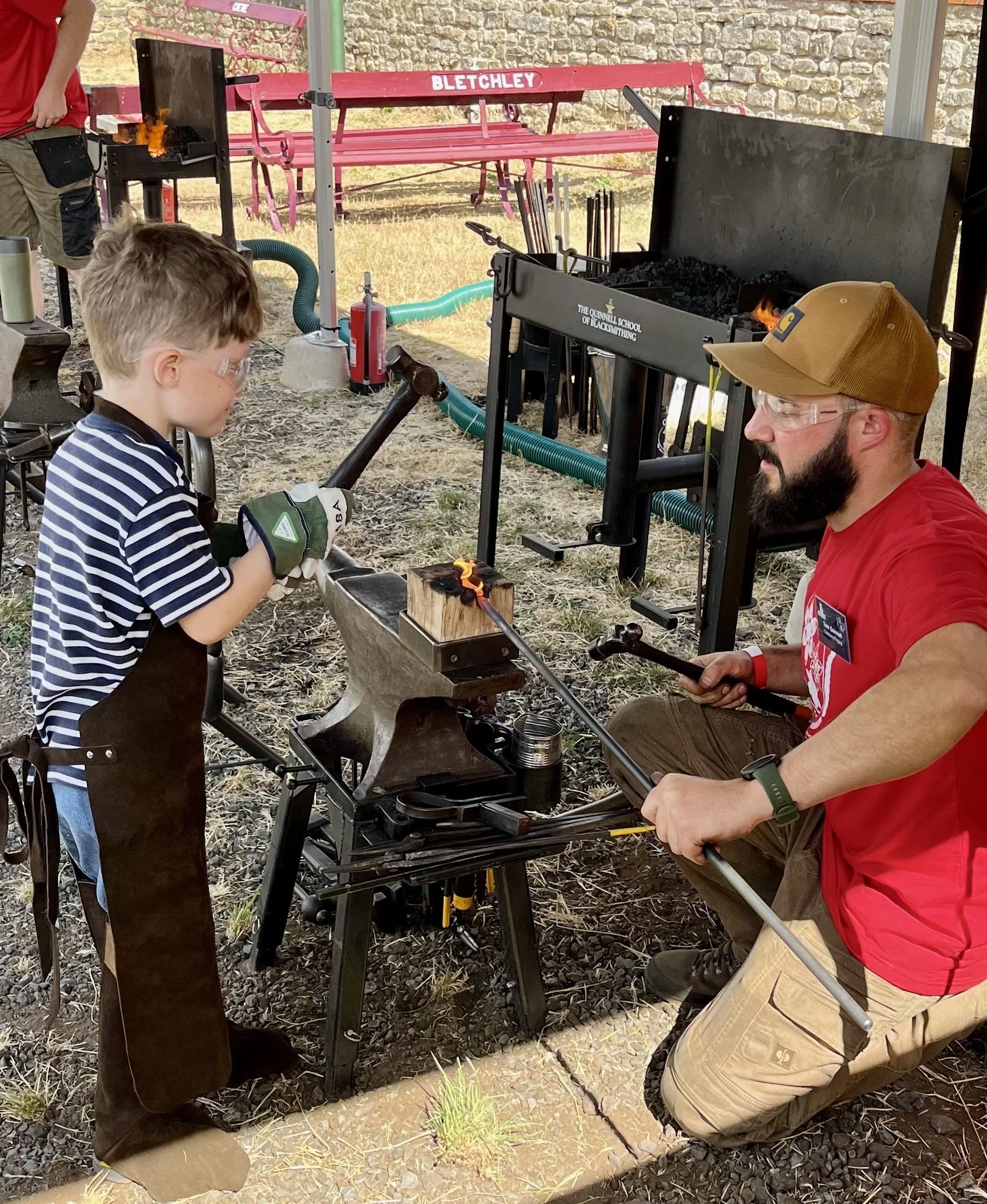
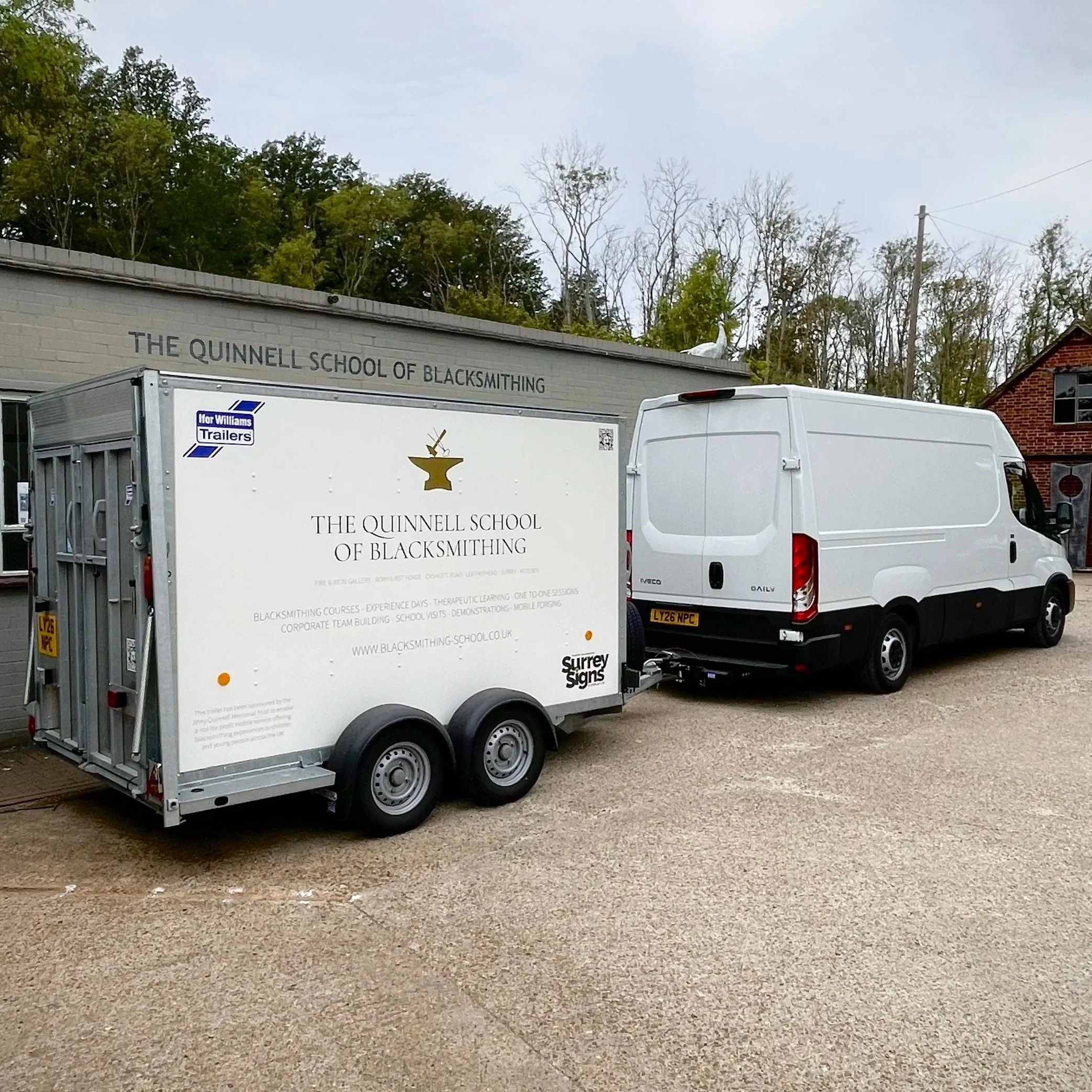
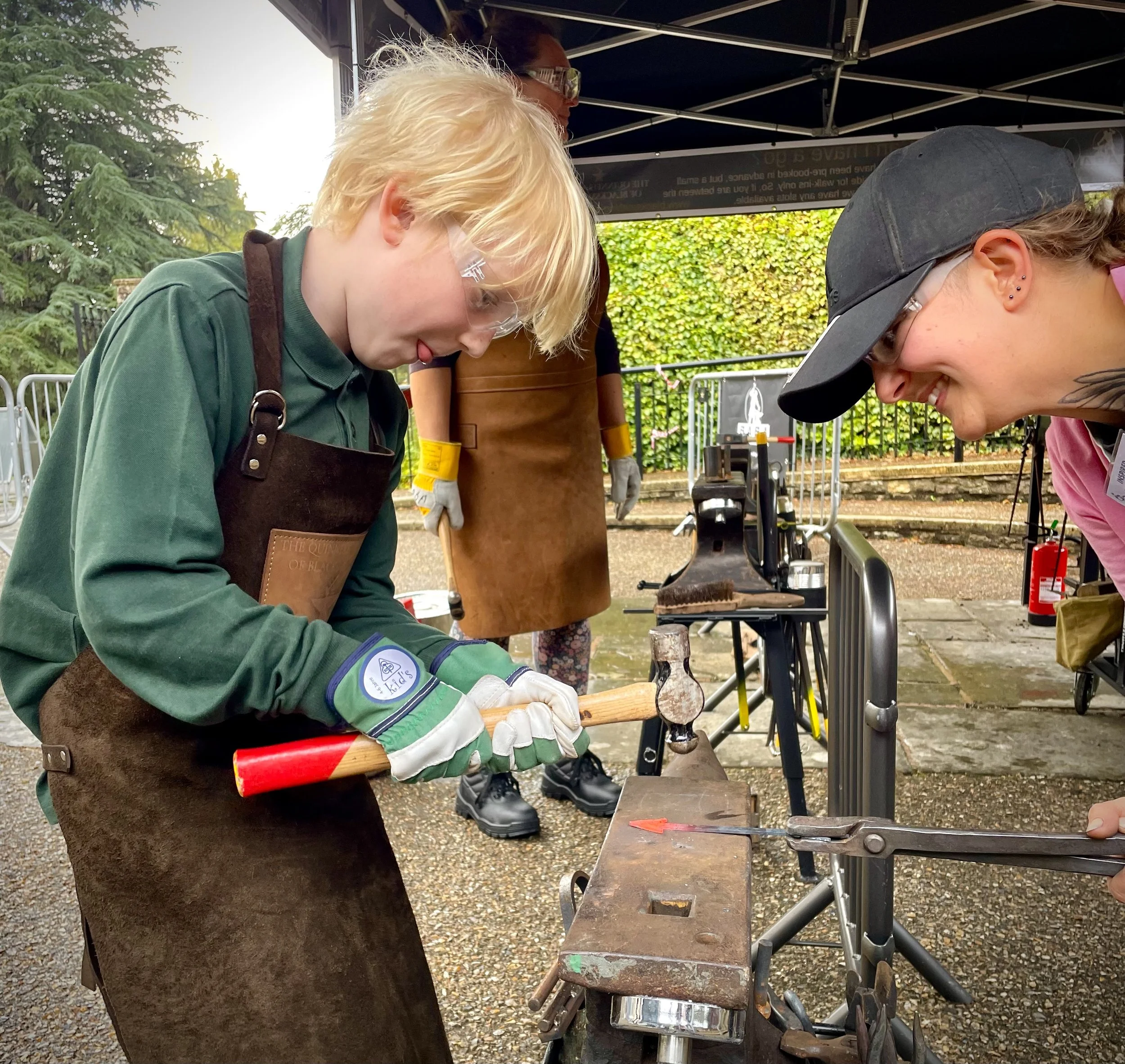
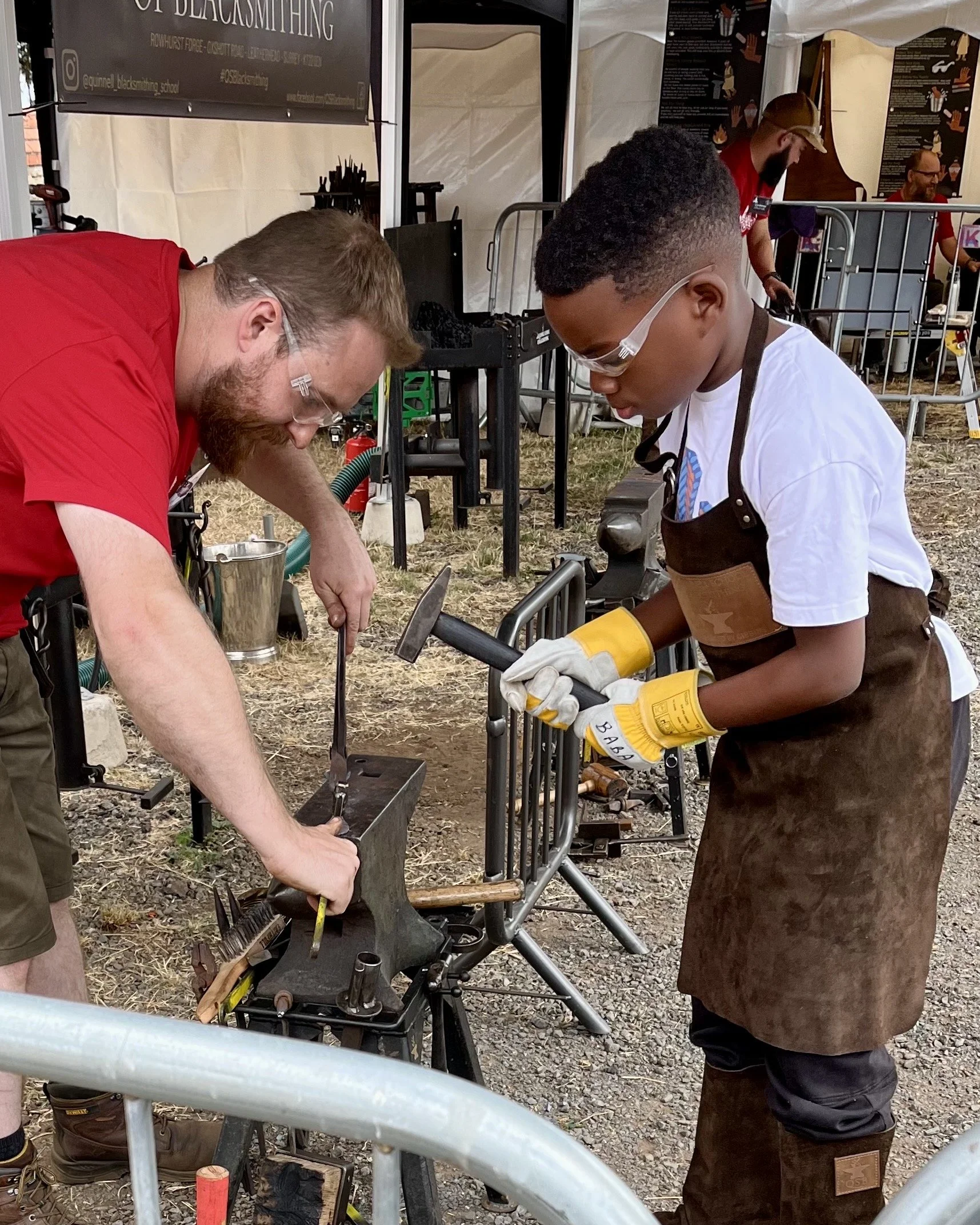
The school continues to operate from the same historic forge where the family business began, bringing together traditional skills, modern teaching methods and an enthusiasm for sharing the craft with new generations.
Rowhurst: A Remarkable Home and a Remarkable History
Long before the Quinnell family arrived, Rowhurst had a story of its own.
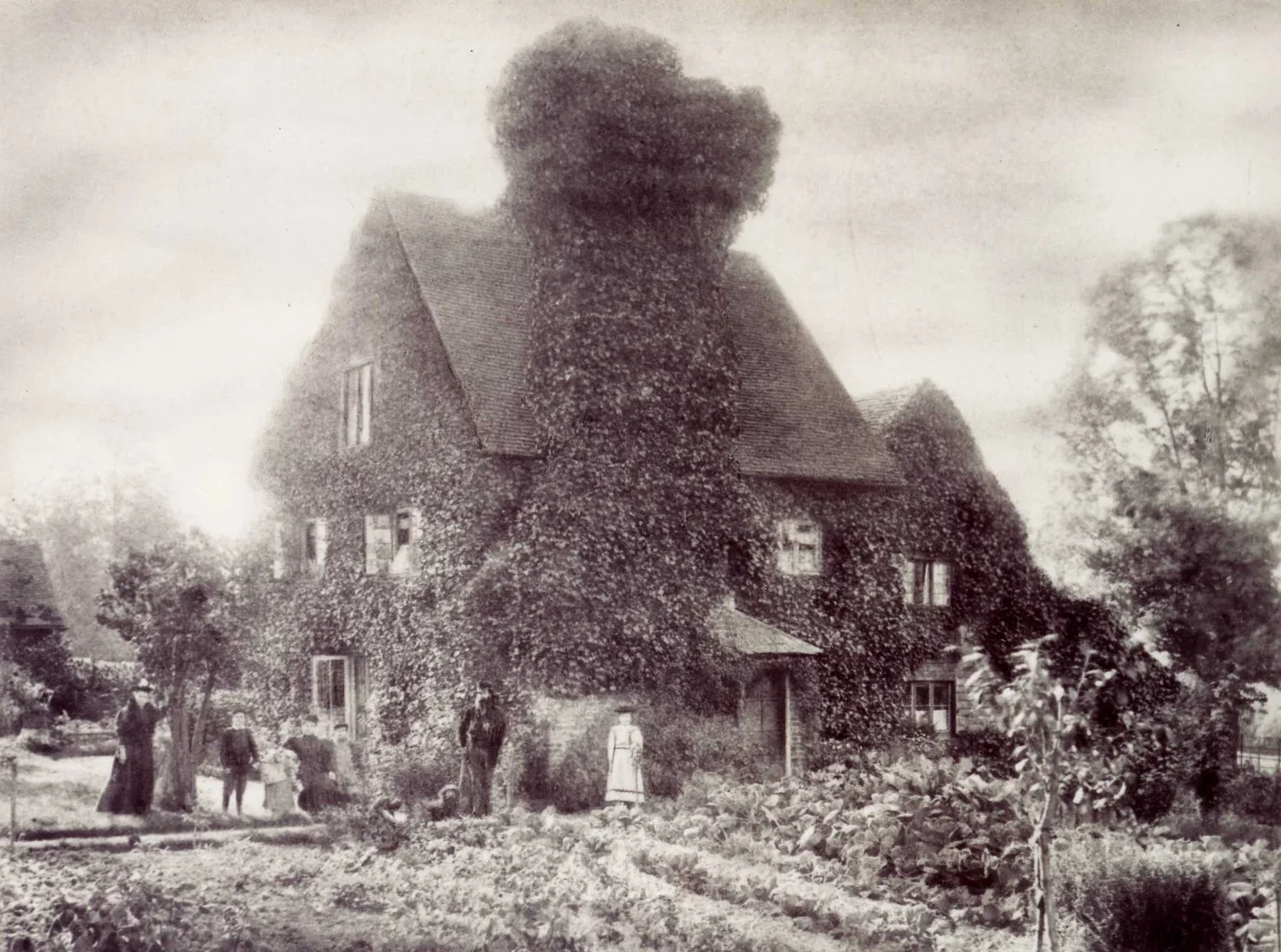
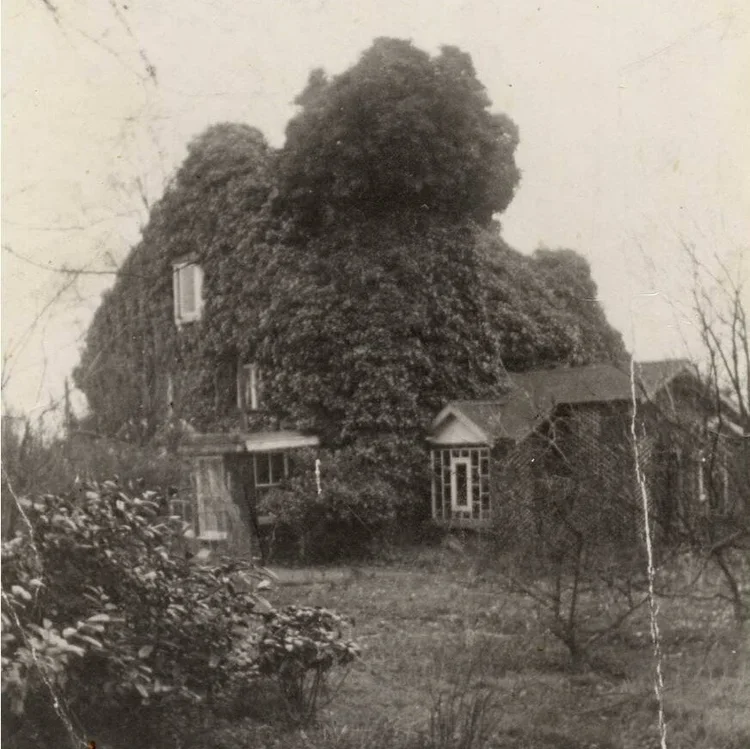
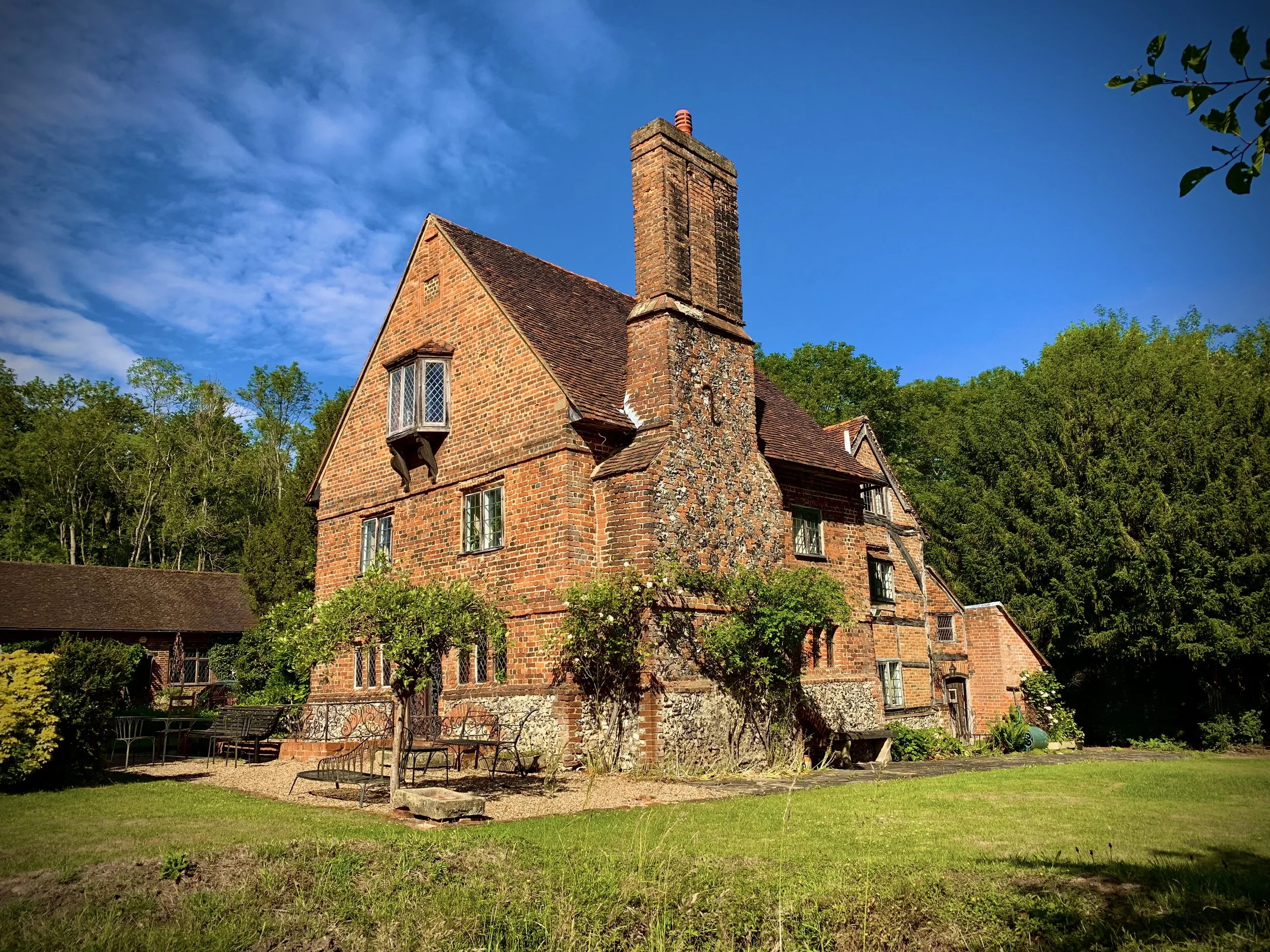
Set within approximately ten acres on the outskirts of Leatherhead, the Rowhurst estate is home to one of Surrey's most intriguing historic houses. Known as Rowhurst, the Grade II* listed building is an extraordinary survivor, with architectural elements pre-dating the medieval period.
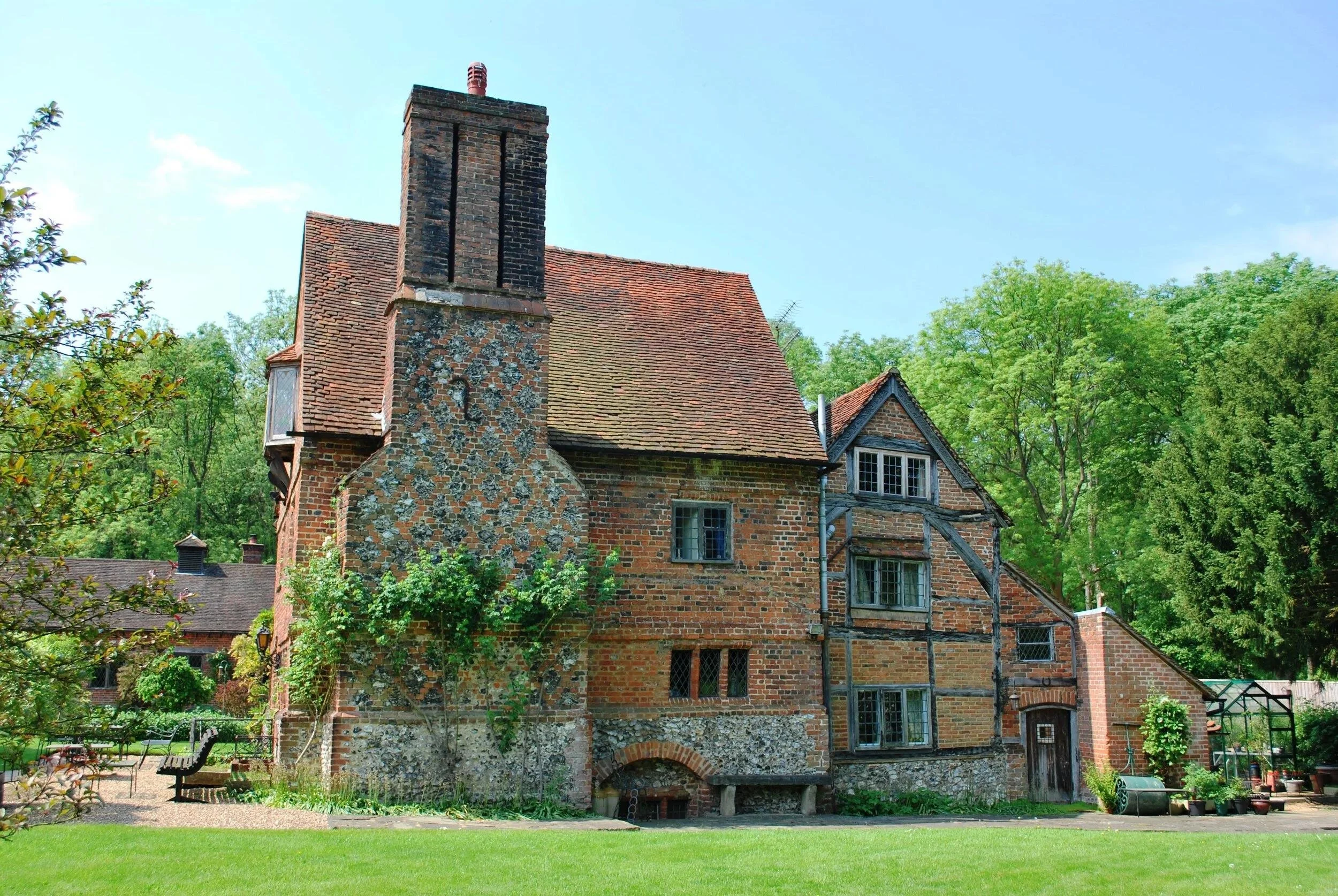
Rowhurst
The Grade II* listed property, home to the Quinnell family since 1932
The house is made up of several distinct phases of construction. Dendrochronological analysis, which dates historic buildings by examining their timber, established that one substantial section dates to 1346, while another was constructed in 1632. Beneath these later structures is an older flint-built semi-basement, the origins and original purpose of which remain a subject of historical investigation.
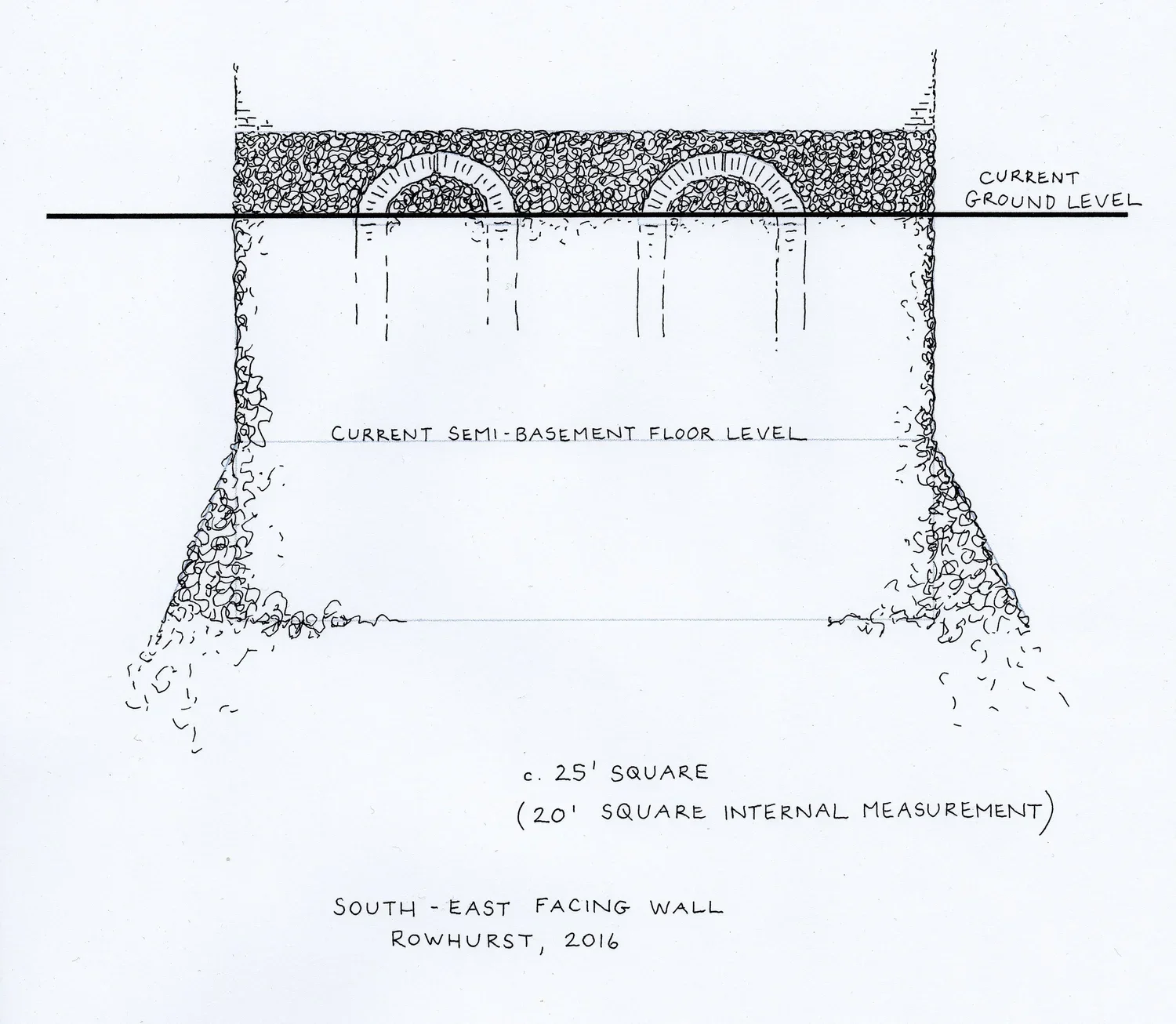
The semi-basement, which is 25' square with 2.5' thick flint walls, and very deep foundations (sketch to the left, showing the semi-basement only), and we are certain it is older than the 1346 wing
For many years, Rowhurst was thought to be principally a Jacobean building. However, decades of research by Lucy Quinnell, including the examination of historic maps, documents, photographs and architectural evidence, have revealed a considerably more complex history.
The surrounding landscape has been associated with a succession of historic activities and settlements. Research has explored Rowhurst’s connections with human occupation dating back 3000 years.
In 2019, archaeological Excavations carried out with the Surrey Archaeological Society uncovered pottery dating from the Late Bronze Age, Early Iron Age, Roman, Late Saxon and medieval periods.
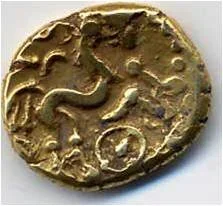
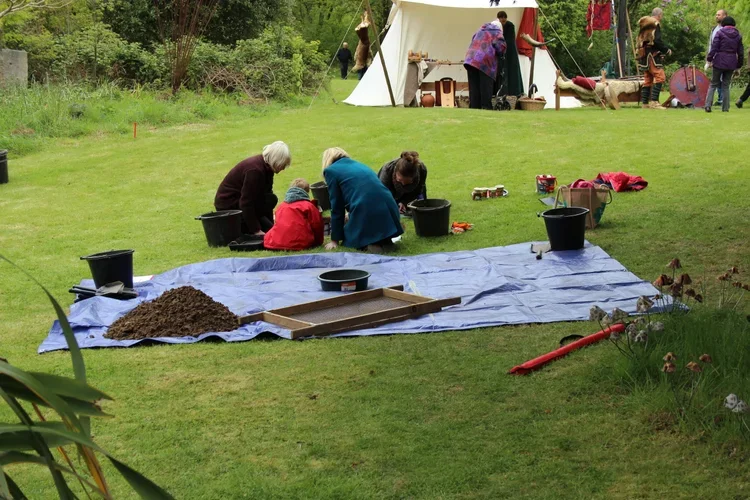
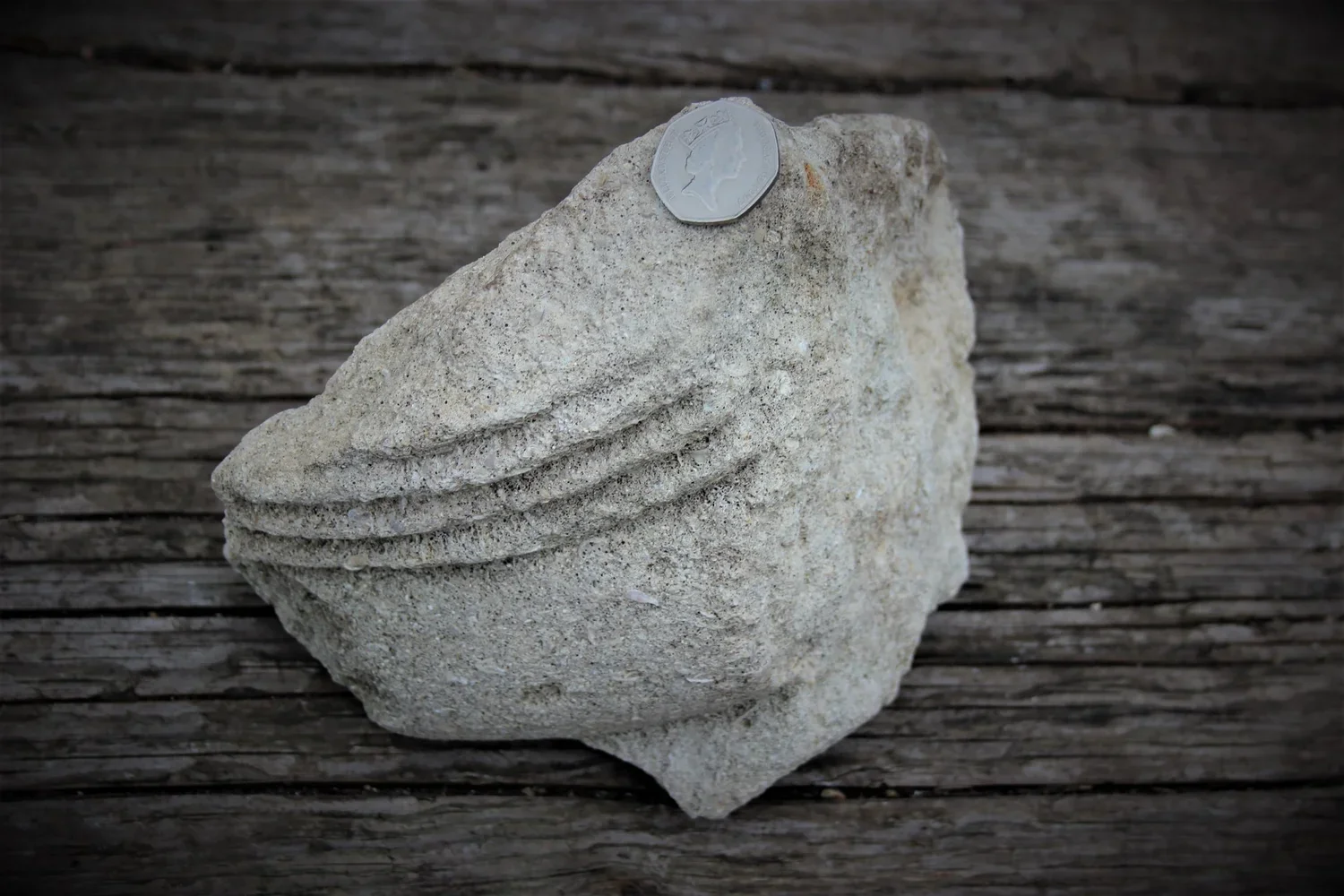
Among the discoveries was an abundance of evidence of Roman activity, including a fragment of amphora pottery originating from Baetica in southern Spain.
Perhaps most intriguing of all was the discovery of iron ore and foundry slag across the site. These finds demonstrated that metalworking has taken place at Rowhurst long before the Quinnell family established their forge in 1932.
It is a remarkable thought that the ground beneath the present-day workshops were associated with the working of iron centuries, perhaps even millennia, before the modern family business began.
Rowhurst is therefore much more than the setting for the Quinnell businesses. It is a place with its own extraordinary history, where the story of ironworking, craftsmanship and human occupation reaches back far beyond living memory.
Today, the house remains Lucy Quinnell's home, and she continues to research, document and carefully restore this important historic building. The restoration is a long-term undertaking, requiring a sensitive understanding of the building's different periods, materials and architectural significance.
The house and its grounds have also provided a setting for television and film productions, documentaries, exhibitions and heritage events, offering annual opportunities for visitors to discover more about the history of the estate.
The relationship between Rowhurst's ancient buildings and the contemporary metalwork displayed throughout the estate gives the site a character that is difficult to replicate elsewhere.
The Next Generation: Continuing the Quinnell Story
The Quinnell family business has always evolved, and its future is no different.
Lucy Quinnell has been central to the development of Fire & Iron and Richard Quinnell Limited for more than three decades. An artist, designer, curator, writer and lecturer, she has continued to expand the family's contribution to contemporary metalwork while preserving its historic foundations.
Having studied at Epsom School of Art & Design and Exeter University, Lucy returned to the family business following the death of her mother, Jinny. She took on the responsibility of developing Fire & Iron, transforming her parents' original vision into an internationally recognised gallery.
Her contribution to the wider blacksmithing community has been equally significant. She has curated hundreds of exhibitions, undertaken major public and private commissions, written and lectured extensively, and served as editor of the British Artist Blacksmiths Association's Artist Blacksmith magazine between 2012 and 2020.
Lucy is also a Companion of the Worshipful Company of Blacksmiths, recognising her contribution to the craft.
Her son, Tom Quinnell, grew up at Rowhurst Forge, immersed in the world of blacksmithing from a very early age. Attending blacksmithing events and conferences with his family from childhood, he developed a natural familiarity with the craft and the people who surrounded it.
After completing his education, Tom pursued a career in mechanical engineering and workshop management with Mercedes-Benz, initiated with a four-year advanced apprenticeship. Following sixteen successful years with the company, he returned to Rowhurst in 2019 to join the family business.
In 2021, Tom took on responsibility for the running of Richard Quinnell Limited alongside Lucy, and in 2022 assumed the management of The Quinnell School of Blacksmithing.
Since returning, he has developed the school, expanding and improving its facilities, developing its educational activities and introducing new opportunities for children and young people to experience blacksmithing.
Alongside his work at the school, Tom remains involved in the practical side of the craft as the key maker for Fire & Iron’s commissioned metalworking projects and he is helping to carry the family's skills and experience into the next generation.
Working alongside Lucy, and supported by his talented team of blacksmiths, tutors and colleagues, Tom represents the continuation of a family enterprise that has never stood still.
One Place. Many Stories. A Shared Passion.
Today, Rowhurst Forge brings together an unusual combination of activities and interests.
Richard Quinnell Limited, trading as The Quinnell School of Blacksmithing, continues the family's commitment to teaching, education and the practical craft of blacksmithing.
Fire & Iron Limited carries forward the family's work in artistic metalwork, gallery exhibitions, bespoke commissions and the promotion of exceptional contemporary craftsmanship.
Alongside these businesses, the historic house and estate of Rowhurst remain a pivotal part of the family's identity, providing a living connection to the area's remarkable past.
Although each has its own purpose and identity, they share a common foundation: a belief in the value of traditional skills, the importance of passing knowledge between generations and the enduring possibilities of working with metal.
From the architectural commissions of Richard Quinnell MBE, to the establishment of BABA, the creation of Fire & Iron Gallery, the teaching of many thousands of participants at the Quinnell School and the ongoing work of the next generation, the story continues to develop.
The Quinnell family has been associated with ironworking for centuries, and at Rowhurst since 1932.
It is a heritage we are proud of, a craft we are passionate about, and a tradition we intend to continue.